Media
All media and our activities will be posted here
- This platform will serve as our official space to share photos, videos, news, and updates about our work, events, and ongoing efforts. Stay informed and engaged as we document our journey, highlight key moments, and showcase the voices and stories behind our mission.
Statement of the Afghan Women’s Movement in Exile on the Occasion of March 8
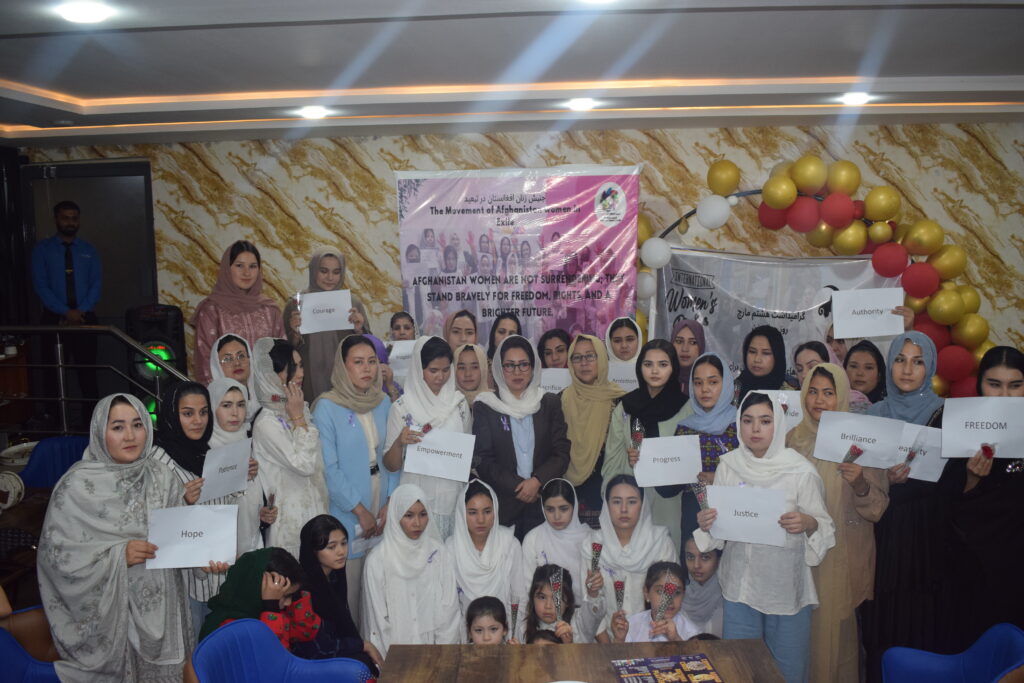
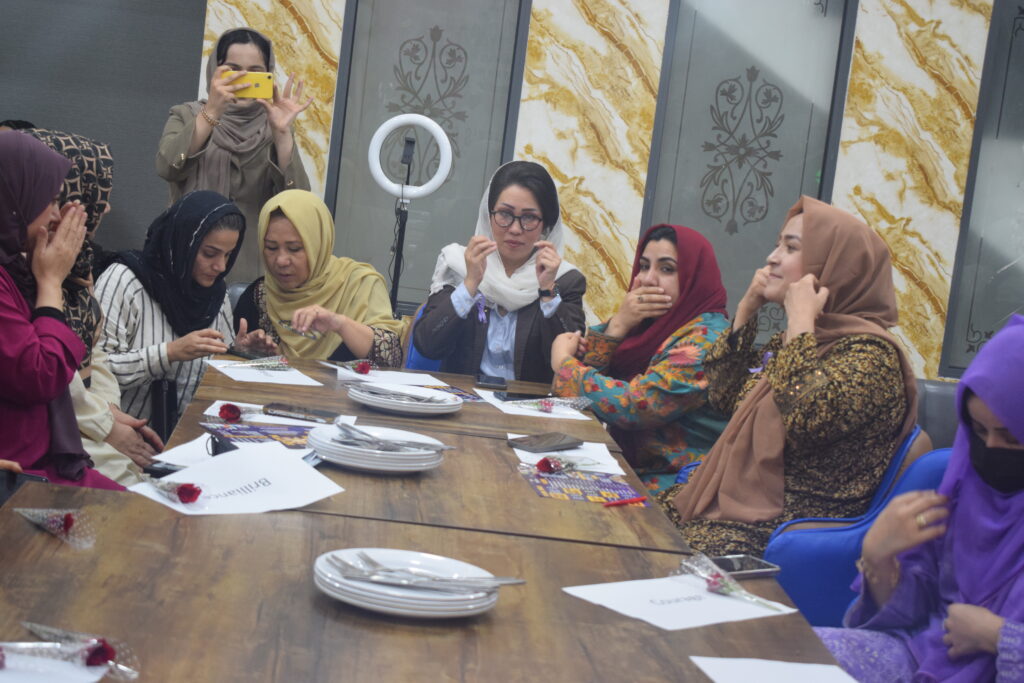
Eighth of March, International Women’s Day, is a symbol of the historic struggle of women for freedom, equality, and justice. This day arrives at a time when the women of Afghanistan are experiencing one of the darkest periods of their contemporary history. After the political developments of recent years, women and girls in Afghanistan have faced widespread and systematic restrictions in the areas of education, work, social presence, and fundamental human rights.
The Afghan Women’s Movement in Exile, on this important day, expresses its deep solidarity with all women and girls who, inside Afghanistan, courageously stand against discrimination, repression, and exclusion from public life. Depriving women of education, preventing them from working and participating in society, and imposing widespread restrictions on their daily lives are clear violations of fundamental human rights and human dignity.
We believe that the exclusion of women from society is not only a great injustice against half of Afghanistan’s population, but also a serious obstacle to the country’s development, peace, and sustainable future. No society can achieve real progress without the active, free, and equal participation of women.
The Afghan Women’s Movement in Exile calls on the international community, human rights institutions, and all freedom-loving forces not to remain silent in the face of the situation of women in Afghanistan and to take practical and effective actions to support the rights, freedom, and dignity of the women of this country.
On this day, we raise the voice of the women of Afghanistan once again.
The women of Afghanistan will not surrender. With hope, courage, and steadfast determination, they continue to struggle for the right to education, freedom, and equality.
The eighth of March reminds us that the struggle for women’s rights continues, and the voice of the women of Afghanistan will never be silenced.
Global Call to Action
In a few days, the world will celebrate International Women’s Day. But for five years, the world has remained silent about the suffering of women of Afghanistan. Since August 2021, women of Afghanistan have been banned from education, removed from work, and erased from public life. Many women activists were forced into exile. Today, thousands of women of Afghanistan are living in Pakistan — without legal protection, without work, and without a clear future. They are not asking for sympathy. They are asking for protection, dignity, and opportunity. The silence must end. We are still standing. And we will not be erased.

Statement of the Afghan Women’s Movement in Exile on the Occasion of International Human Rights Day
Statement of the Afghan Women’s Movement in Exile on the Occasion of International Human Rights Day
In the Name of Freedom, Dignity, and Human Equality
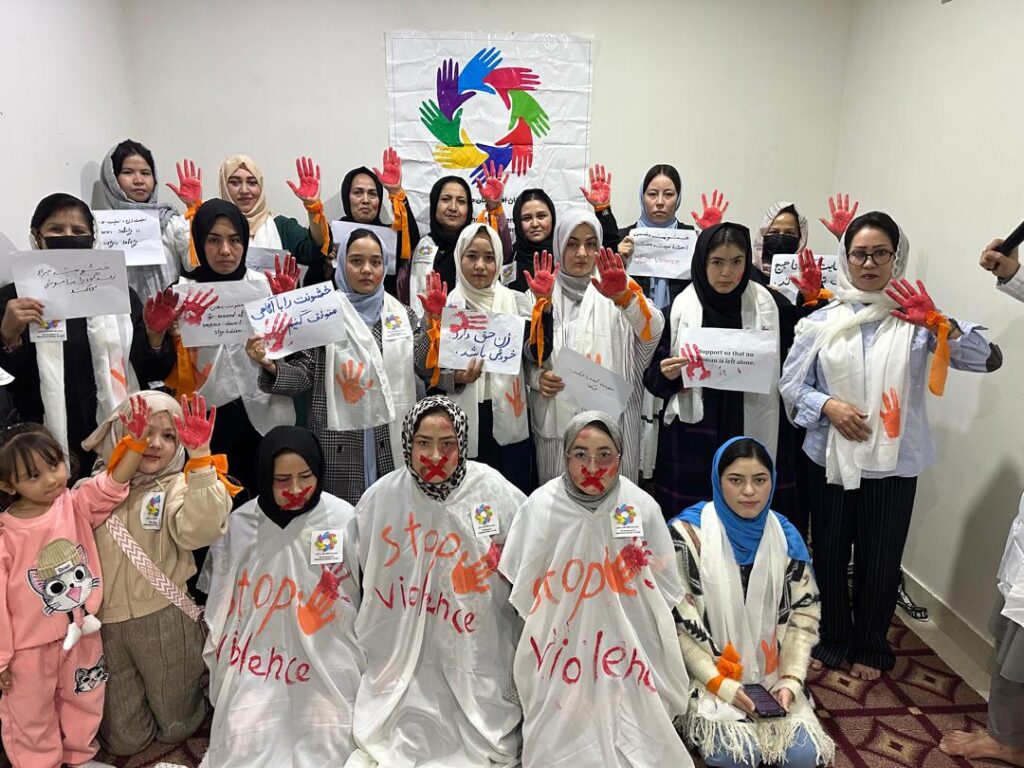
On International Human Rights Day, we—the Afghan Women’s Movement in Exile—raise our voices for millions of Afghan women and girls who, both inside the country and beyond its borders, have become victims of discrimination, violence, and inhumane policies. This day should symbolize the protection of human dignity. Yet the reality of Afghanistan and the region today presents a stark picture of systematic and widespread human rights violations.
In Afghanistan, women face the most severe forms of repression.
Their rights to education, work, freedom of movement, and political participation have been completely stripped away.
Governmental and social structures have deliberately erased women from public life.
Gender-based violence, forced marriages, strict social restrictions, censorship, arbitrary detentions, and security threats have placed women’s lives under constant danger.
These conditions are not only a clear violation of human rights, but also a form of gender apartheid and systematic deprivation that has no historical, cultural, or political justification.
Millions of Afghan women and girls who fled to neighboring countries in search of safety are now facing structural violence, legal discrimination, lack of residency documentation, educational restrictions, arbitrary detention, and gender-based harassment there as well.
These women live in environments where their legal and social security is not guaranteed, and access to basic services remains limited or denied.
Forced deportation is a blatant violation of human rights and a disregard for human dignity.
Regrettably, host countries this year have adopted widespread policies of forced deportation of Afghan refugees—particularly women and children—actions that have had catastrophic humanitarian consequences.
These deportations not only ignore the human status of women, but send them back to the very environment where their lives, freedom, and dignity are under threat. Forcibly returning individuals to places where they face risks of torture, violence, or systematic discrimination is a direct violation of fundamental human rights and refugee protection principles.
For us, International Human Rights Day is not merely a symbolic date.
It is the voice of women who continue to resist even in the darkest circumstances.
Until the rights of Afghan women are restored, any talk of human rights in this region is meaningless.
Forced deportation and global silence are themselves forms of complicity in human rights violations.
The Afghan Women’s Movement in Exile will continue its struggle for freedom, equality, and human dignity—standing alongside all women who refuse to accept silence.
Statement o f Afghanistan Women in exile regarding the Penal Code principles issued by Taliban
The Afghanistan Women’s Movement in Exile considers the “Penal Code Principles” issued by the Islamic Emirate to be a clear manifestation of systematic human rights violations, criminal injustice, and structural discrimination against women. This code, by violating the principle of equality before the law, denying the right to defense and legal counsel, prescribing corporal and multiple punishments, and criminalizing conduct in a discriminatory manner—such as labeling women’s apostasy as a crime—stands in complete contradiction to Afghanistan’s former Penal Code and the fundamental principles of fair trial.
From a legal perspective, these regulations possess neither legal legitimacy nor compatibility with standards of justice, human dignity, and international human rights law. We firmly declare that this penal system functions as an instrument for the repression of women and the eradication of citizens’ fundamental rights, and it must be held accountable as an unlawful system that violates human rights.
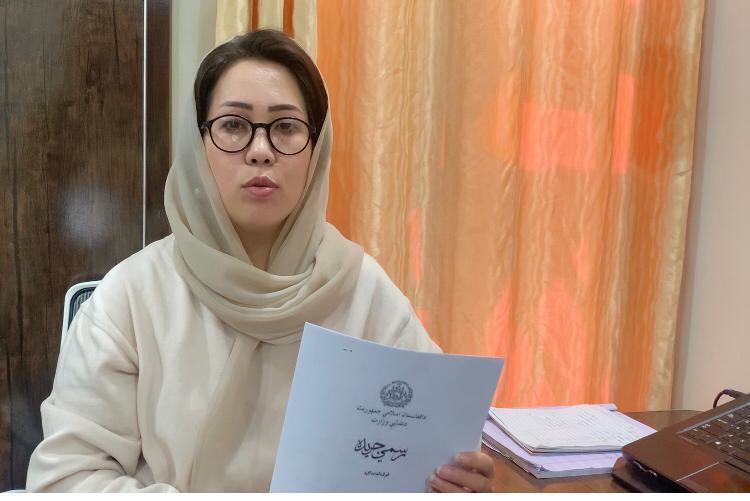
Joint Statement Condemning Gender Apartheid, Slavery, and Crimes Against Humanity in Afghanistan Addressed to the International Criminal Court
Joint Statement Condemning Gender Apartheid, Slavery, and Crimes Against Humanity in Afghanistan
Addressed to the International Criminal Court, the United Nations Human Rights Council, the Office of the High Commissioner for Human Rights, UN Member States, the European Union, and the International Community
We, the undersigned, express our profound concern regarding the catastrophic human rights situation in Afghanistan, particularly the systematic and targeted repression of women and minorities. We strongly condemn the policies, laws, and practices imposed by the Taliban that have resulted in the complete exclusion of women from social, educational, professional, and public life. These measures have deliberately and systematically destroyed the lives of millions of women and girls, subjecting them to structural violence, poverty, house confinement, forced marriage, and the absolute deprivation of human dignity.
With reference to the Taliban courts’ Penal Code Principles and the “Law on the Promotion of Virtue and Prevention of Vice” adopted in August 2024, we emphasize the occurrence of widespread, systematic, and organized crimes against humanity in Afghanistan. The Law on the Promotion of Virtue and Prevention of Vice, through the issuance of dozens of inhumane decrees, has deprived Afghan women of their most basic human rights, including by mandating full-body and face covering, prohibiting their voices from being heard in public spaces, and imposing absolute restrictions on movement without a male guardian (mahram). By establishing an institutionalized system of domination, segregation, and gender-based exclusion, these policies constitute all elements of gender apartheid and, pursuant to Article 7 of the Rome Statute of the International Criminal Court, amount to crimes against humanity.
The Taliban courts’ Penal Code Principles divide society into four classes—religious scholars, elites, the middle class, and the lower class—and determine punishments based on social status rather than the nature of the offense, thereby completely violating the principle of equality before the law. Furthermore, the use of the term “slave” and the provision allowing punishment to be carried out by an “owner” grant legal legitimacy to slavery. This constitutes a clear violation of the 1926 Slavery Convention, the Universal Declaration of Human Rights, the Convention on the Elimination of All Forms of Discrimination against Women, and the International Covenant on Civil and Political Rights.
This code also intensifies religious discrimination by labeling followers of non-Hanafi sects as “innovators” (mubtadi‘); by granting authority for arbitrary and collective punishments without proof of individual criminal responsibility, it further undermines fundamental principles of justice and due process.
Statement of the Afghanistan Women’s Movement in Exile On the Occasion of Yalda Night
Yalda Night, as one of the oldest cultural symbols of the peoples of this land, represents the triumph of light over darkness and hope over despair. For centuries, this historic tradition has carried messages of cultural resilience, social solidarity, and human dignity. Yet for Afghan women today, Yalda is no longer merely a night of celebration; it has become a symbol of deprivation, repression, and the systematic erasure of cultural and human identity.
In Afghanistan under authoritarian rule, women are not only deprived of their fundamental rights—such as education, work, and participation in public life—but are also denied the right to celebrate cultural traditions, hold peaceful gatherings, and even express joy. These deprivations constitute a clear violation of human rights and a deliberate effort to silence women and remove them from the public sphere.
Even in exile, Afghan women face the harsh realities of displacement, legal uncertainty, poverty, insecurity, and the absence of effective international protection. The inability to freely observe occasions such as Yalda Night reflects the precarious and vulnerable condition of women who have become victims of political decisions and the indifference of the international community.
The Afghanistan Women’s Movement in Exile emphasizes that cultural repression is an inseparable component of the broader system of gender-based oppression in Afghanistan. Silence in the face of this situation amounts to legitimizing structural discrimination and widespread violations of women’s rights. We call upon the international community, the United Nations, human rights institutions, and responsible governments to move beyond symbolic statements and take concrete, sustainable, and accountable measures to support Afghan women.
Despite all restrictions, Afghan women remain bearers of the light of resistance. Just as the philosophy of Yalda promises the end of darkness, we believe that this cycle of repression will not endure. Cultural resistance, bearing witness to the truth, and collective steadfastness are integral parts of our struggle for freedom, justice, and the restoration of human dignity.
For us, Yalda Night is a reminder that even the darkest nights are not everlasting.
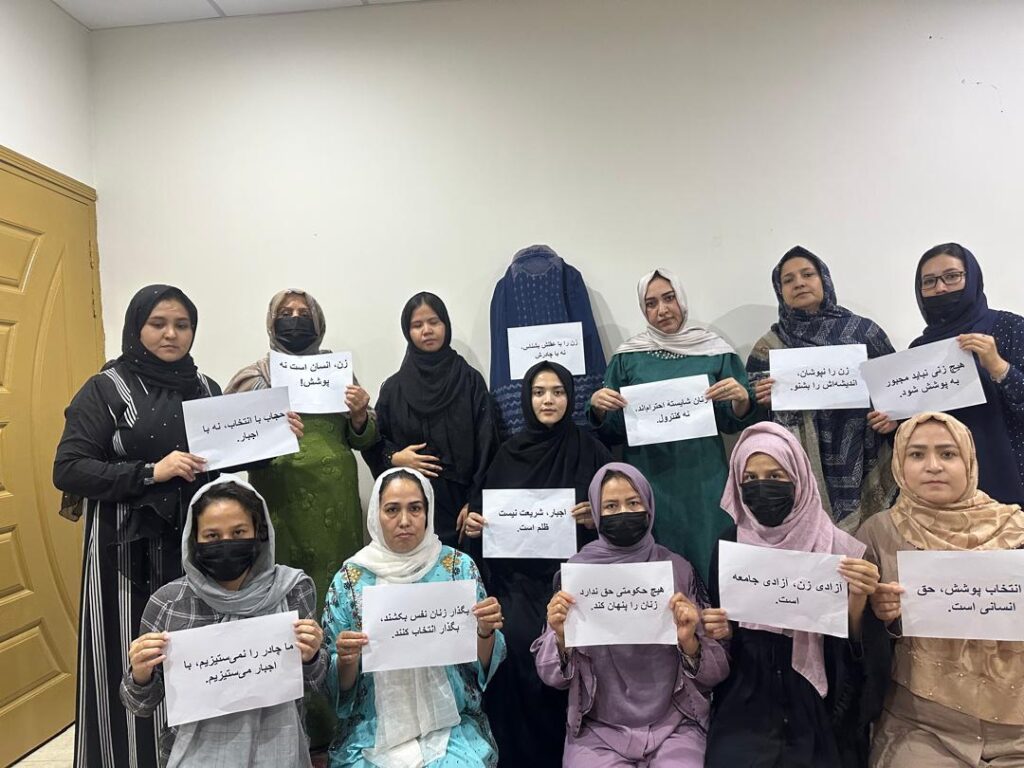
Protest Statement of the Afghanistan Women’s Movement in Exile Regarding the Taliban’s Ban on Women Entering Herat Province Without a Chadori
We, the members of the Afghanistan Women’s Movement in Exile, express our deep concern and outrage over the Taliban’s decision in Herat to prohibit women who are not wearing a chadori (full-body veil) from entering offices, hospitals, and public facilities.
According to credible reports, the Taliban are preventing women from accessing healthcare centers unless they are wearing a chadori. This measure constitutes not only a blatant violation of women’s right to freedom of movement and human dignity, but also one of the most ruthless forms of social humiliation and restriction of women’s fundamental rights.
By imposing such extreme limitations, the Taliban seek to exclude women from social life, deprive them of even their most basic civic rights, and criminalize their presence—even in essential spaces such as hospitals.
We call upon human rights organizations and the international community to:
Recognize this action as a serious violation of the human and social rights of Afghan women;
Demand the immediate revocation of this regressive policy;
Take firm and practical measures to protect the basic rights of women in Afghanistan.
We, the women of Afghanistan, will not remain silent.
It is our right to be recognized as human beings—
without the imposition of the chadori or any form of coercion.
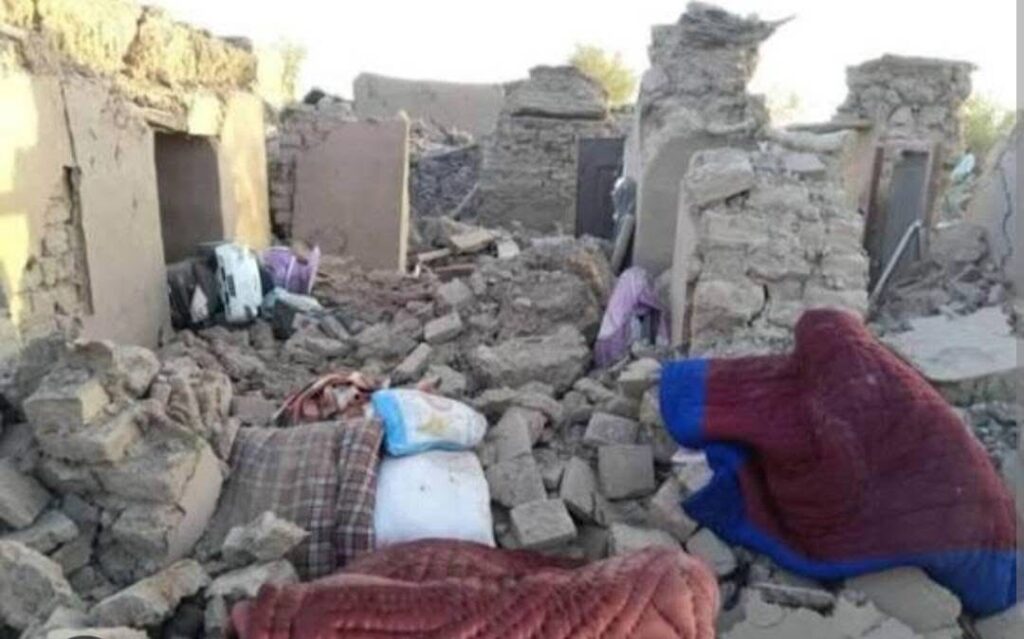
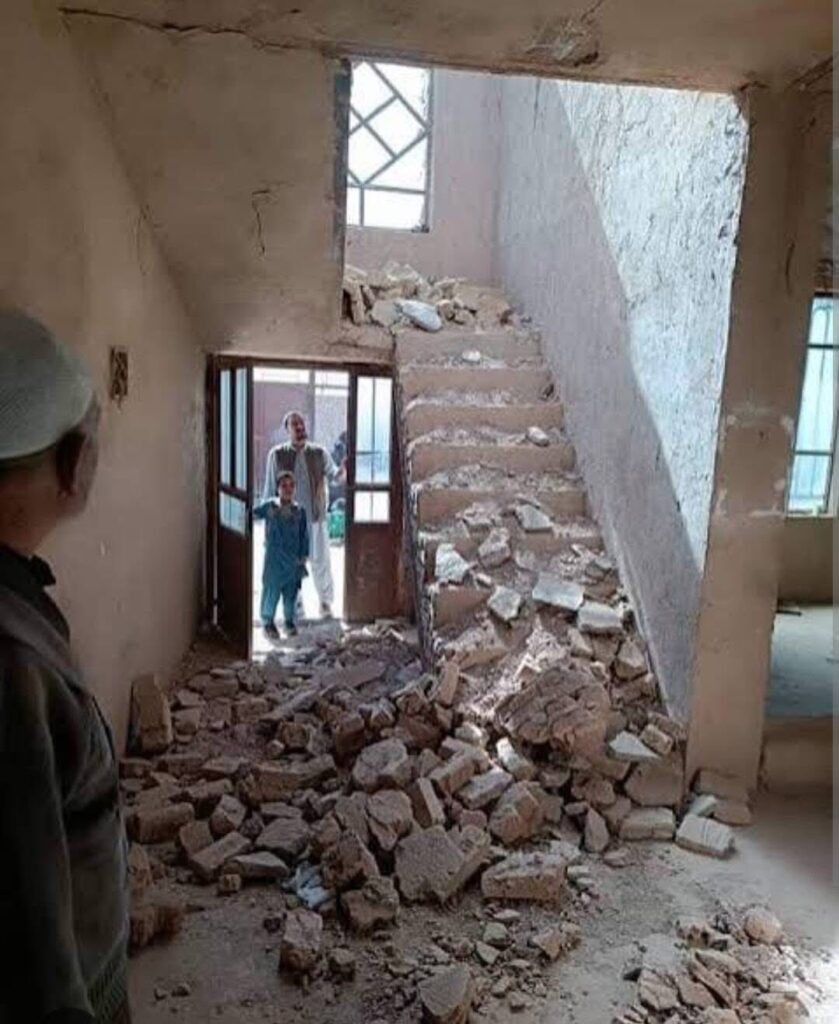
Condolence and Solidarity Message from the Women’s Movement of Afghanistan in Exile On the Occasion of Last Night’s Earthquake in the Provinces of Balkh and Samangan
With deep sorrow and profound grief, we learned that last night’s earthquake in several provinces of Afghanistan has claimed the lives of a number of our compatriots and caused extensive human and material losses.
The Women’s Movement of Afghanistan in Exile extends its heartfelt condolences to the families of the victims and to all the suffering people of Afghanistan, and expresses its deep sympathy to the survivors of this tragedy.
In these difficult moments, our hearts are with the families who have lost their loved ones and with those who, in the autumn cold, have lost their homes and livelihoods. We call upon the international community, humanitarian organizations, and human rights activists to take immediate action to deliver urgent assistance to those affected by this disaster.
May our people, through solidarity, patience, and mutual support, emerge from this difficult trial with dignity and strength.
With respect and sympathy,
Women’s Movement of Afghanistan in Exile
Statement of the Women’s Movement of Afghanistan in Exile on the Occasion of Teacher’s Day
As we commemorate Teacher’s Day, we do so at a time when in our homeland, Afghanistan, the light of knowledge has been extinguished in many homes, and the voices of teachers and students have fallen into enforced silence.
Today, thousands of Afghan girls are deprived of their natural right to education, and teachers — these beacons of awareness — are either living in hardship and isolation or fading into the bitter silence of neglect.
The Women’s Movement of Afghanistan in Exile, with hearts filled with both sorrow and hope, extends its appreciation on Teacher’s Day to all courageous educators who, in every corner of the world, stand against the darkness of ignorance and oppression. We remember all the women who were once teachers and are now barred from teaching, yet still carry the flame of knowledge within their hearts.
A teacher is the pillar of awareness and awakening in society. To forget the teacher is to allow the future to collapse. We believe that no power can extinguish the light of knowledge, and no wall can create distance between Afghan women and their right to learn.
We call upon the international community, educational and cultural institutions, and all awakened consciences to stand beside the women and teachers of Afghanistan, so that the day may come when Afghan girls once again embrace their notebooks and pens with smiles.
On this Teacher’s Day, we honor all teachers who are not forgotten and all students left without schools.
Women’s Movement of Afghanistan in Exile
06.Oct.2025
Women’s Movement of Afghanistan in Exile Commends Ms. Sima Nouri’s Solidarity Visit to Afghan Women Protesters in Pakistan
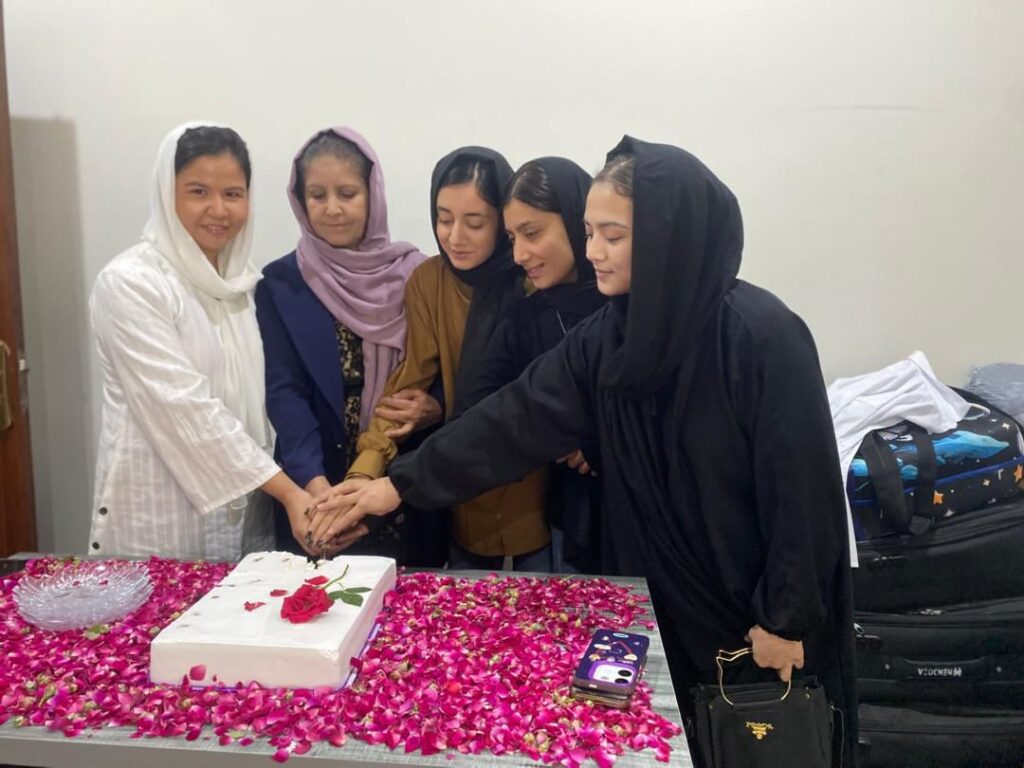
We sincerely express our gratitude and appreciation for the visit of the delegation of the meeting of Taliban opponents in Islamabad, especially for the fruitful and valuable presence of Ms. Sima Nouri, one of the leadership members of this meeting.
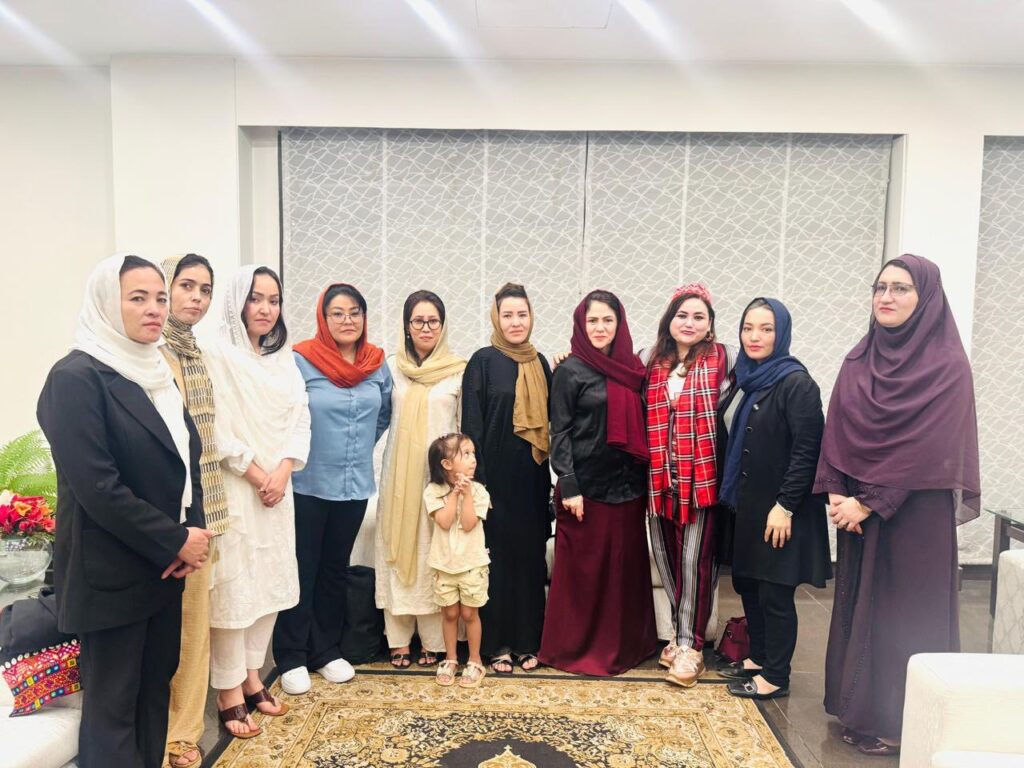
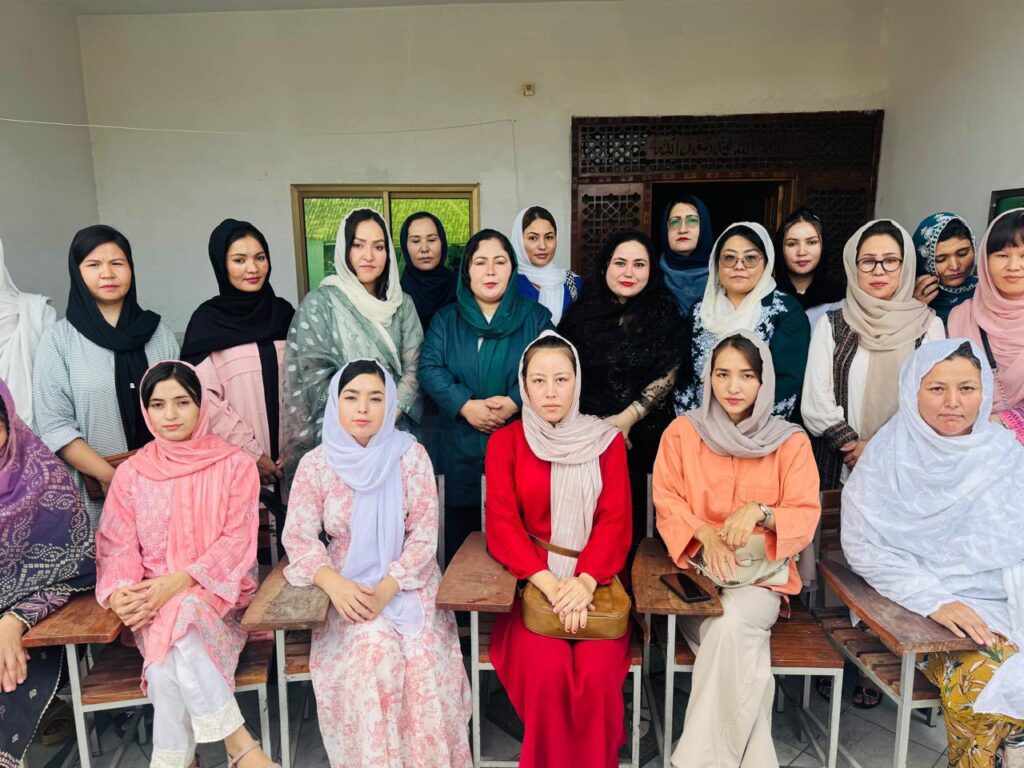
During this visit, with a steadfast spirit and a heart full of compassion, Ms. Nouri hastened to meet protesting women and girls who are living under difficult and unsafe conditions, under the shadow of the threat of forced deportation in Pakistan. In the cities of Punjab, Sadiqabad, and Faisal Town, accompanied by the heads of protest movements—Farzana Rezai, Rahel Talash, Safia Arefi, and Latifa Shojaei—she met closely with protesting women and girls and inquired about their well-being while offering them comfort and support.
In these meetings, Ms. Nouri, with firm support for the protesting women and girls, delivered hopeful remarks and reminded them that:
Our path is difficult, but we Afghan women must remain strong to create pride for future generations; a day will come when being a woman in our homeland will not be a crime, and with every change of regime, only women will not bear the heavy cost.
This companionship and solidarity, at a time when many Afghan women and girls in Pakistan are even deprived of leaving their homes, ignited a spark of hope and resilience in their hearts.
The Women’s Movement of Afghanistan in Exile, with great pride and gratitude, thanks Ms. Sima Nouri for her valuable efforts and solidarity and considers this presence a significant step toward the unity and steadfastness of Afghan women.
Likewise, at the end of these meetings, all the protesting women and girls, with hearts full of hope and appreciation, expressed their gratitude to Ms. Nouri.
With respect,
03 October 2025
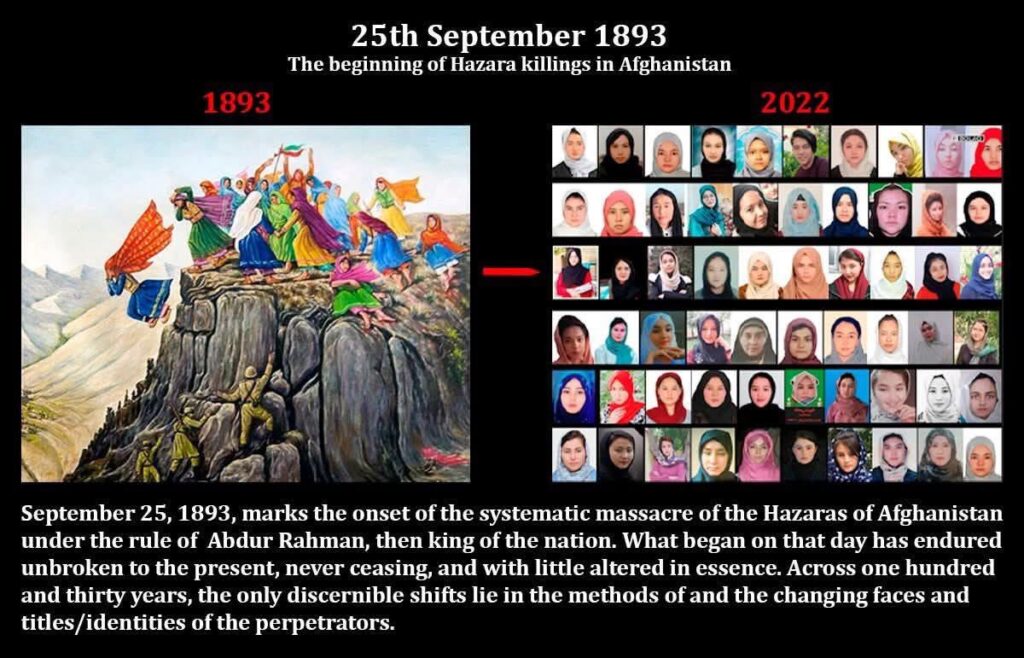
Statement of the Women’s Movement of Afghanistan in Exile: Regarding the Genocide of Hazaras!
The Women’s Movement of Afghanistan in Exile strongly and unequivocally condemns the systematic genocide of the Hazara people, which has continued over the past decades and especially under the current conditions under the rule of the terrorist group Taliban. Today, Hazaras face serious dangers not only in Afghanistan but also in neighboring countries, including structural discrimination, forced deportation, uncertainty, and humanitarian crisis.
In Afghanistan, the Taliban, through discriminatory and criminal policies, forcibly seize the homes and lands of the Hazara people, deprive them of the right to education, work, and free life, and through targeted killings and repeated attacks, have targeted the very existence of this community. In neighboring countries, thousands of Hazara migrant families are struggling with the threat of forced deportation, extreme poverty, homelessness, and deprivation of the most basic human rights.
The Women’s Movement of Afghanistan in Exile emphasizes that the genocide of Hazaras is part of a policy of ethnic cleansing and identity erasure that must be recognized by the international community. Silence and inaction by international institutions in the face of this tragedy amount to complicity with the perpetrators and the continuation of the cycle of violence.
We call upon the United Nations, human rights institutions, and the international community to:
1: Recognize the genocide of Hazaras as a crime against humanity;
2: Establish immediate and effective mechanisms to protect the Hazara people in Afghanistan and migrants in neighboring countries;
3: Subject the Taliban to international prosecution for committing systematic crimes against the ethnic groups and women of Afghanistan.
The Women’s Movement of Afghanistan in Exile declares its full solidarity with the Hazara people and believes that only through unity, advocacy, and collective resistance can this blatant crime be confronted. Our voice will never be silenced until justice is achieved for the victims of the Hazara genocide and all the people of Afghanistan.
✦ Women’s Movement of Afghanistan in Exile ✦
25 September 2025

Protest Statement of the Women’s Movement of Afghanistan in Exile Regarding the Internet Shutdown by the Taliban in Mazar-e-Sharif!
The Women’s Movement of Afghanistan in Exile strongly condemns, in the strongest terms, the Taliban’s action in cutting off the internet in the city of Mazar-e-Sharif. Through this inhumane act, the Taliban seeks to eliminate online education, block the people’s means of communication, and silence the voices of advocacy of women and citizens.
The shutdown of the internet is not merely a technical action; rather, it is a tool for consolidating tyranny, imposing total censorship of the truth, and concealing the ongoing crimes of the Taliban against the people of Afghanistan and the international community. This anti-human policy further deprives Afghan women and girls—whose only ray of hope is online education—of their right to education and participation in society.
On behalf of Afghan women in exile, we warn that the continuation of such restrictions signifies the expansion of absolute silence, systematic repression, and the blatant violation of fundamental human rights.
We call upon the international community, human rights organizations, and international institutions not to remain silent in the face of this Taliban action and to exert serious pressure to guarantee the people of Afghanistan their right to access the internet, freedom of expression, and education.
The Taliban must understand that no wall is higher than the truth, and no internet shutdown can silence the voices of Afghan women.
Women’s Movement of Afghanistan in Exile:
Official Statement of the Women’s Movement of Afghanistan in ExileRegarding the Forced Deportation of Migrants from Pakistan
We, the members and representatives of the Women’s Movement of Afghanistan in Exile, express our utmost concern and sorrow regarding the decision and process of the forced deportation of Afghan migrants from Pakistan, and hereby declare our position.
We, the migrants of Afghanistan—including civil activists, journalists, human rights defenders, and employees of governmental and international institutions—were compelled to leave our country following the سقوط نظام جمهوری in 2021 and the direct threats posed by the Taliban group. Over the past four years, we have lived in a state of uncertainty, without security and without a clear future. Neighboring countries, particularly Pakistan, have hosted us during this period, and we have lived in full compliance with the domestic laws of those countries.
Under Article 33 of the 1951 Convention Relating to the Status of Refugees (the principle of non-refoulement), no country has the authority to forcibly deport individuals who face a direct threat of torture, persecution, or death. This principle is one of the fundamental pillars of international law and human rights, and even states that are not formal parties to the Convention are obligated to respect it.
Furthermore, Afghan migrants entered Pakistan legally following the fall of Afghanistan and have acted in accordance with that country’s domestic laws, including requirements to leave the capital and reside in designated areas. Now that the process of visa renewals has been halted, labeling them as “illegal” is unjust and contrary to legal and humanitarian principles.
The forced deportation of thousands of Afghan women, children, and families from Pakistan would mean delivering them into the direct threat of the Taliban and extremist groups. The bitter experience of past forced returns of migrants from neighboring countries, which resulted in the killing and imprisonment of many, remains vivid in our collective memory.
Therefore, we explicitly declare:
Migration is not a crime. Afghan migrants have been compelled to leave their country due to war, threats, and widespread human rights violations.
The Government of Pakistan and the international community are obligated to uphold the principle of non-refoulement and to refrain from any deportation or forced expulsion.
The process of forced deportation of Afghan migrants must be immediately halted.
Legal deadlines for migrants’ stay must be extended.
The cases of migrants, especially women, children, and human rights defenders, must be reviewed urgently and fairly.
We emphasize that the continuation of deportations will only lead to uncertainty, violence, and the death of thousands of people, and direct responsibility for its consequences will rest with the involved governments and the international community.
Women’s Movement of Afghanistan in Exile
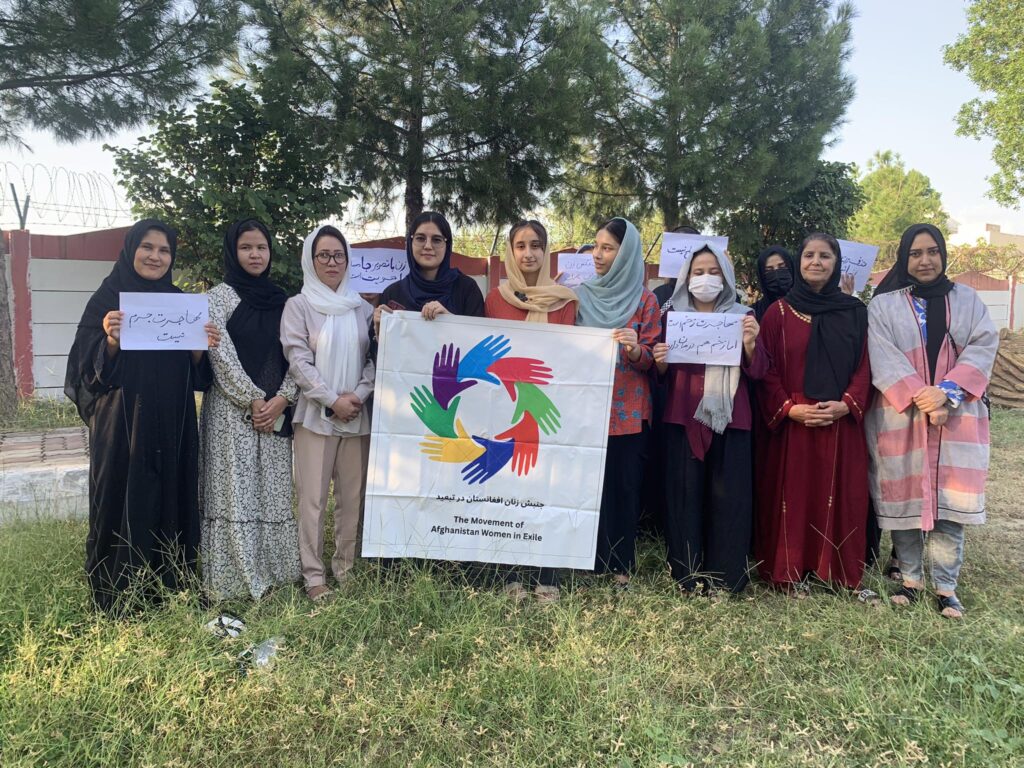
اعلامیه جنبش زنان افغانستان در تبعید در پیوند به حذف تصاویر زنان از اسناد هویتی
جنبش زنان افغانستان در تبعید با نشر اعلامیهای، حکم تازه طالبان مبنی بر حذف تصاویر زنان از تذکرههای هویتی را محکوم کرده و آن را بخشی از «پروژه آپارتاید جنسیتی» این گروه دانسته است.
در اعلامیه آمده است که این تصمیم تازه طالبان ادامه سیاستهای «زنستیزانه و تبعیضآمیز» سه سال اخیر است که از محرومیت زنان از آموزش و کار آغاز شد و اکنون به حذف هویت رسمی آنان رسیده است.
این جنبش تأکید کرده است که تذکره مطابق ماده ۴۶ قانون اساسی افغانستان سند رسمی هویت فردی هر شهروند است و هیچ ربطی به جنسیت ندارد. همچنان، ماده ۲۲ قانون اساسی صراحت دارد که تبعیض میان زن و مرد ممنوع است و تمامی شهروندان دارای حقوق مساوی میباشند. به گفته این جنبش، حذف تصویر زنان از تذکره «نقض آشکار این اصول» و «انکار وجود و کرامت نیمی از جمعیت کشور» است.
در بخشی از این اعلامیه آمده است: «این سیاست طالبان تنها یک تصمیم اداری نیست، بلکه بخشی از یک پروژه سازمانیافته برای تثبیت نظام آپارتاید جنسیتی است. طالبان از هویت زنان نه برای احترام به حقوقشان، بلکه صرفاً برای مشروعیتبخشی به حاکمیت غیرقانونی خود استفاده میکنند.»
جنبش زنان افغانستان در تبعید خطاب به جامعه جهانی و سازمان ملل گفته است که در برابر این سیاستهای ضدانسانی طالبان سکوت نکنند و برای جلوگیری از حذف سیستماتیک زنان از عرصههای اجتماعی و حقوقی افغانستان، فشارهای جدی وارد سازند.
این جنبش همچنان تأکید کرده است: «زنان افغانستان بیچهره نیستند، بیهویت نیستند و هرگز خاموش نخواهند شد.»
سارا آدامس؛ افشاگری مامور سیا پرده دگر از چهره پنهانی طالبان برداشت
سارا آدم، مأمور پیشین سازمان سیا، اخیراً با انتشار مجموعهای از تصاویر، پرده از چهره پنهان طالبان برداشت. او نشان داد که شماری از زنان وابسته به این گروه، گذرنامههای دیپلماتیک در اختیار دارند؛ امتیازی ویژه که تنها در اختیار حلقههای نزدیک به قدرت قرار گرفته است. این اقدام توجه افکار عمومی را به شدت جلب کرده و پرسشهای تازهای را درباره تبعیض و روابط پشت پرده طالبان برانگیخته است.
این افشاگری درست در زمانی صورت میگیرد که طالبان در قوانین جدیدشان درج تصویر زنان در کارتهای هویت را بهطور کامل ممنوع کردهاند. تناقض آشکار میان این تصمیم و امتیازدهی به زنان نزدیک به خود، بار دیگر ماهیت دوگانه طالبان را برملا میسازد: گروهی که در ظاهر زنان افغانستان را حذف میکند، اما در عمل برای منافع شخصی و سیاسی، استثناهای ویژه میسازد.


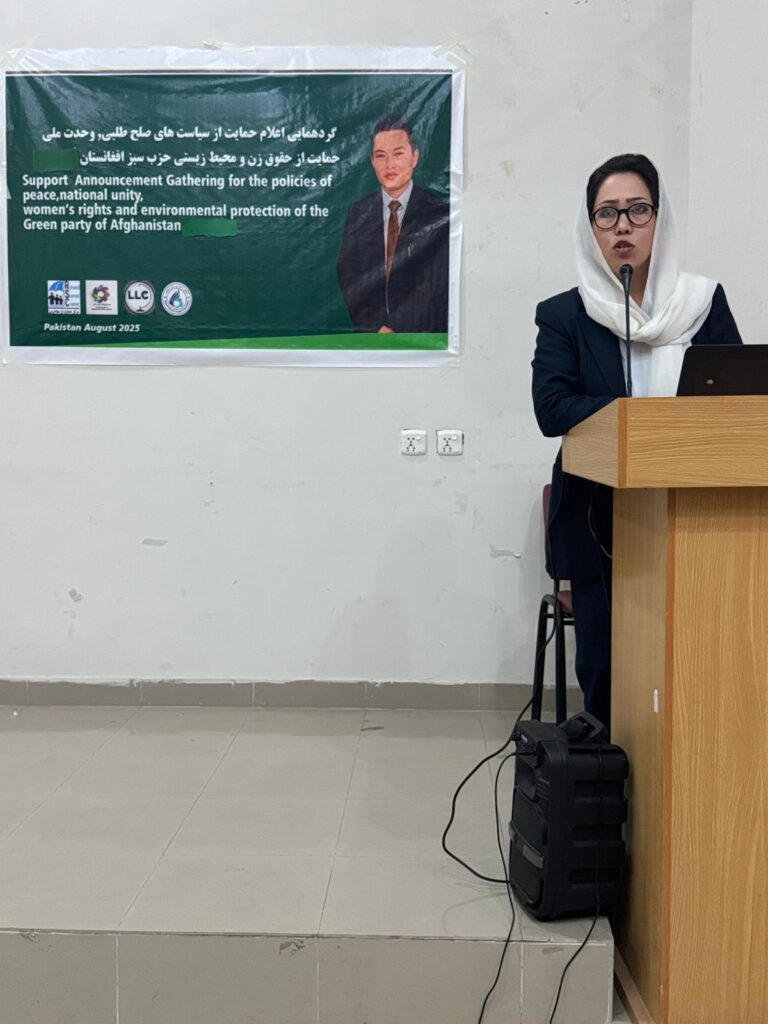
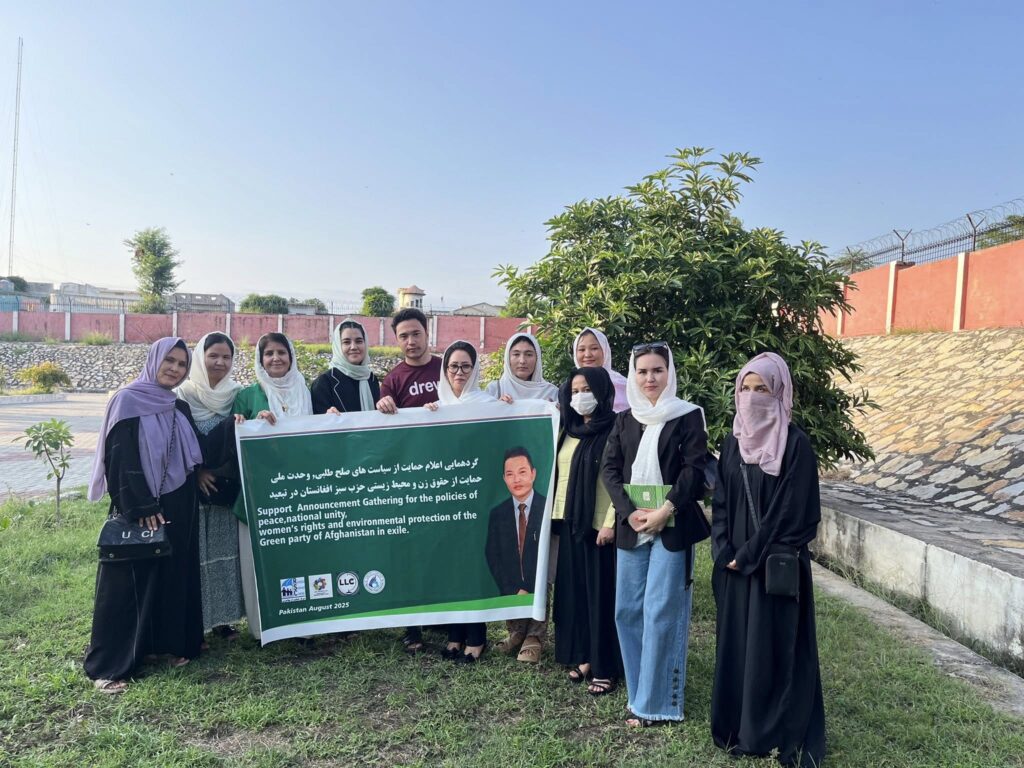
بیانیه پایانی گردهمایی اعلام حمایت ،از سوی: جنبش زنان افغانستان در تبعید ،انجمن همیاری زنان مهاجر ،مرگزاموزشیLLC مرکزحمایت از مهاجرین
ما، جمعی از فعالان سیاسی، اجتماعی، فرهنگی و نهاد های اجتماعی فرهنگی مهاجر مقیم پاکستان، امروز در گردهمایی اعلام حمایت از سیاست های حزب سبز افغانستان در تبعید گرد آمدهایم تا با صدای واحد بر ارزشها و آرمانهای مشترک خود تأکید کنیم.
افغانستان امروز در یکی از تاریکترین دورههای تاریخی خود به سر میبرد:
زنان از حقوق اساسی خویش محروم شدهاند؛
اقلیتها و صداهای متفاوت سرکوب میشوند؛
اقتصاد فروپاشیده و فقر دامنگیر شده است؛
و طبیعت، زمین و منابع حیاتی کشور بهشکل بیسابقهای در معرض تخریب قرار گرفته است.
در برابر این وضعیت بحرانی، ما باور داریم که امید تنها در سازماندهی، همبستگی و طرح یک برنامهی ملی و انسانی نهفته است. حزب سبز افغانستان در تبعید، با پایبندی به ارزشهای دموکراسی، عدالت اجتماعی، حقوق بشر، محیطزیست و صلح پایدار، میتواند بستر تازهای برای بازاندیشی آیندهی کشور فراهم سازد.
ما در این گردهمایی با قاطعیت اعلام میکنیم که:
• حمایت از سیاستهای محیطزیستی: حفاظت از طبیعت افغانستان، منابع آبی، جنگلها و زمینهای کشاورزی نه یک انتخاب، بلکه ضرورتی حیاتی برای بقا و بازسازی آینده کشور است. گذار عادلانه انرژی و عدالت اقلیمی، از اهداف بنیادی ما خواهد بود.
• حمایت از صلح و عدم خشونت: جنگ و خشونت بیپایان تنها ویرانی آفریده است. ما از سیاست صلحمحور حزب سبز پشتیبانی میکنیم که گفتوگو و همزیستی مسالمتآمیز را جایگزین جنگ و نفرت میسازد.
• حمایت از حقوق زنان و اقلیتها: افغانستان بدون مشارکت آزاد و برابر زنان، آیندهای نخواهد داشت. ما در کنار زنان افغان، اقلیتها، و همهی گروههای آسیبپذیر ایستادهایم و از سیاستهای حزب سبز در دفاع از حقوق آنان حمایت میکنیم.
• حمایت از وحدت ملی و احترام به تنوع: افغانستان خانهی مشترک همهی اقوام، زبانها و فرهنگها است. ما بر سیاستهای وحدتبخش و کثرتگرا تأکید میکنیم و باور داریم که احترام به تنوع، زیربنای ثبات و عدالت اجتماعی است.
• حمایت از سازماندهی دیاسپورا: میلیونها افغان در تبعید زندگی میکنند. ما حمایت خود را از برنامه حزب سبز برای سازماندهی سیاسی، اجتماعی و فرهنگی دیاسپورا اعلام میکنیم تا این سرمایه بزرگ انسانی در خدمت بازسازی آینده کشور قرار گیرد.
در پایان، ما بار دیگر بر تعهد خود نسبت به آرمانهای عدالت، آزادی، برابری و محیطزیست تأکید میکنیم. ما با حزب سبز افغانستان در تبعید همراهیم تا صدای خاموششدهی ملت خود را در جهان زنده نگه داریم و راه را برای افغانستانی آزاد، سبز، دموکراتیک و متحد هموار کنیم.
زنده باد عدالت اجتماعی، زنده باد صلح و آزادی، زنده
باد افغانستان سبز و متحد!
جمعی از نهاد های اجتماعی-فرهنگی مهاجرین افغانستان مقیم پاکستان
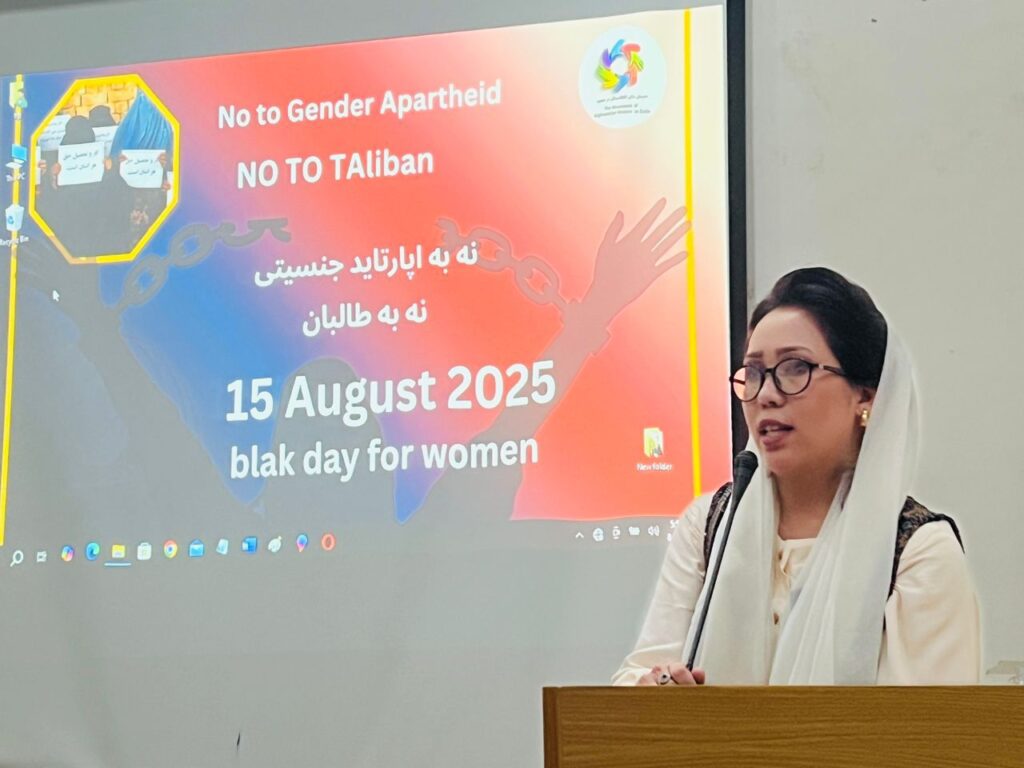
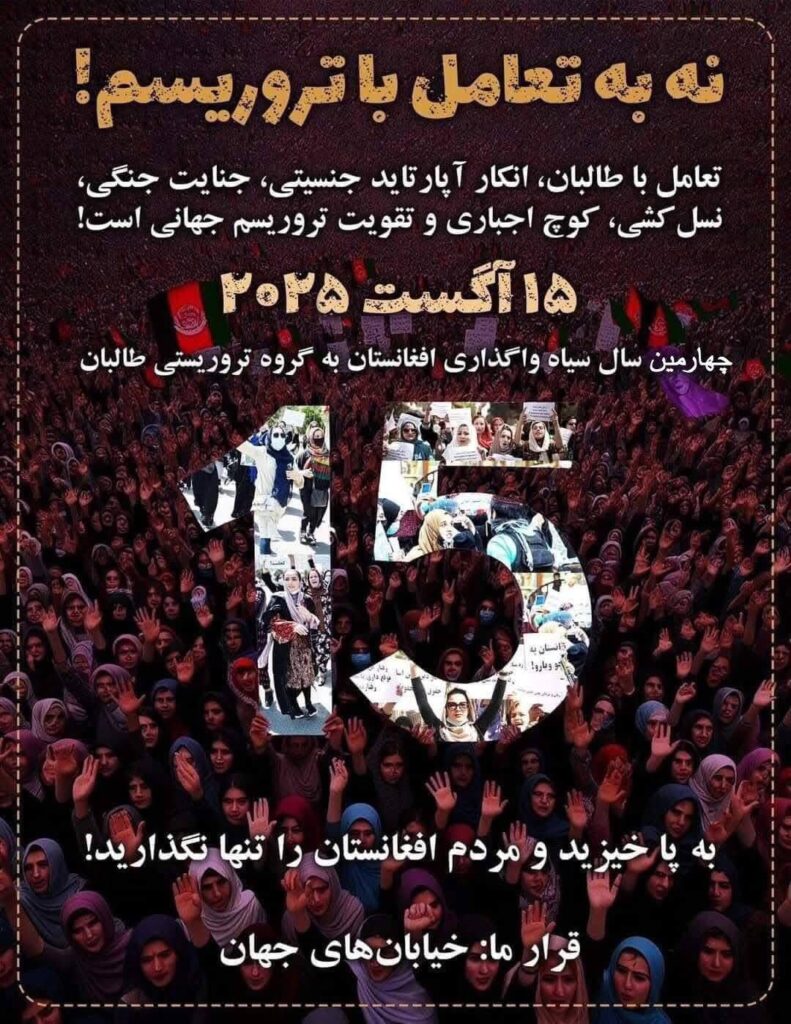
Resolution of the Afghan Women’s Movement in Exile On the Occasion of August 15 – Anniversary of the to the Taliban
Afghanistan has plunged into the darkness of ignorance and regression—a darkness marked by the closure of schools and universities to girls, the exclusion of women from work and public life, intensified repression of ethnic and religious minorities, and widespread violations of human rights in Afghanistan.
We stand here to declare that the women and people of Afghanistan will never surrender to discrimination and oppression, and that the international community must not ignore this catastrophe.
We strongly condemn the Taliban’s regressive regime for its misogynistic policies, systematic human rights violations, and the exclusion of women from the country’s social and political life.
We, the members of this movement, call for the immediate reopening of schools and universities to all girls in Afghanistan and urge the United Nations and its member states to make this demand a precondition for any engagement with the Taliban.
We condemn the Taliban’s discriminatory policies against Hazaras and other ethnic and religious minorities, and we call on the United Nations and all human rights institutions to establish a special monitoring and protection mission to prevent the continuation of genocide, forced displacement, and systematic repression of these groups.
We strongly condemn the seizure of people’s lands, the burning of homes, and the armed attacks by Kuchis in Hazara-populated areas carried out with Taliban support, and we demand accountability for the perpetrators of these crimes.
We call upon international institutions—foremost the United Nations—to provide practical, security, and legal support to human rights defenders, journalists, civilian and military personnel of Afghanistan, civil society activists, defenders of women’s and children’s rights, and ethnic and religious minorities, both inside and outside Afghanistan.
We condemn the removal and restriction of the Persian (Dari) language from the education system and media by the Taliban and regard it as part of a policy of cultural cleansing that must be stopped.
We demand the realization of women’s fundamental rights to freedom of expression, freedom of peaceful assembly, equal participation in political decision-making, and the right to education and employment without any discrimination or restriction. We call on the United Nations Human Rights Council to prioritize these issues in its monitoring and concrete actions.
We call on the government of Pakistan and the international community to provide legal residency status, security, and essential services to Afghan asylum seekers and to refrain from their forced deportation.
We warn that any recognition of the Taliban would amount to legitimizing oppression and discrimination. We call on countries around the world not to recognize the Taliban as a legitimate government and to continue political, economic, and legal pressure against them.
We, the members of the Women’s Movement in Exile, pledge to the women of Afghanistan and to people around the world that until equality and freedom are achieved, social justice is secured, oppression and discrimination are eliminated, and a democratic and people-based system is established, we will not remain silent. We will raise our voices for truth and continue the path of peaceful resistance.
Conclusion:
This resolution, as the official voice of the protesting women’s movement of Afghanistan, is submitted to the United Nations, the European Union, human rights institutions, and the free media of the world. We call upon the international community not only to listen but to stand alongside and support the struggle of Afghan women.
The women and people of Afghanistan will never surrender.
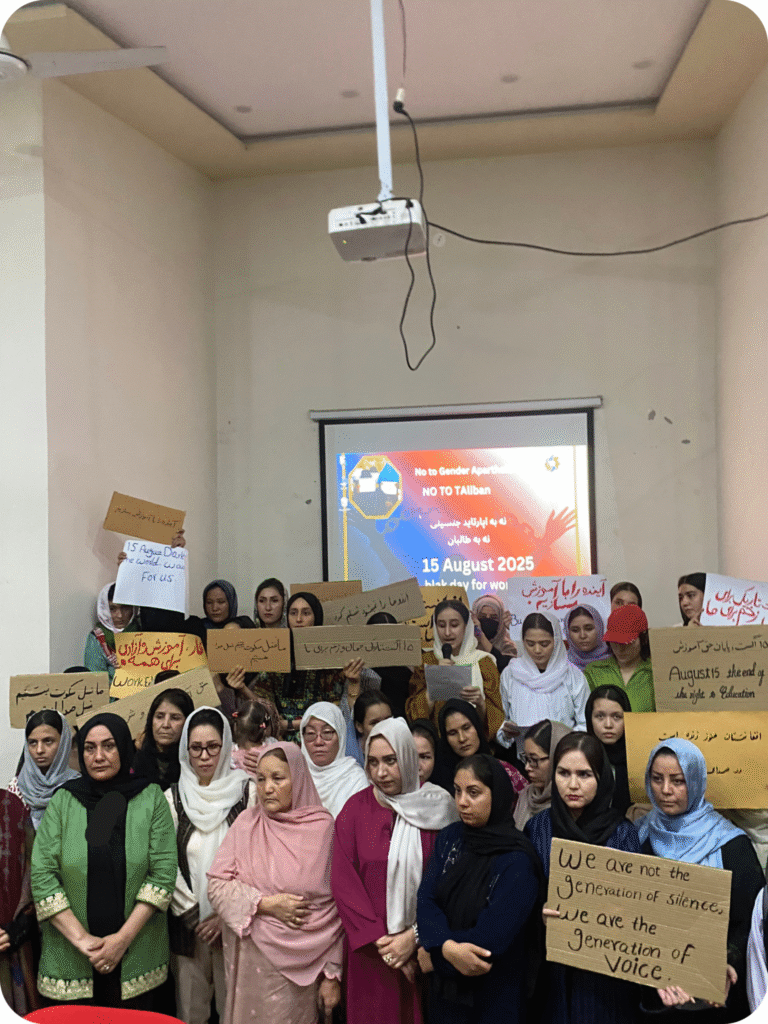
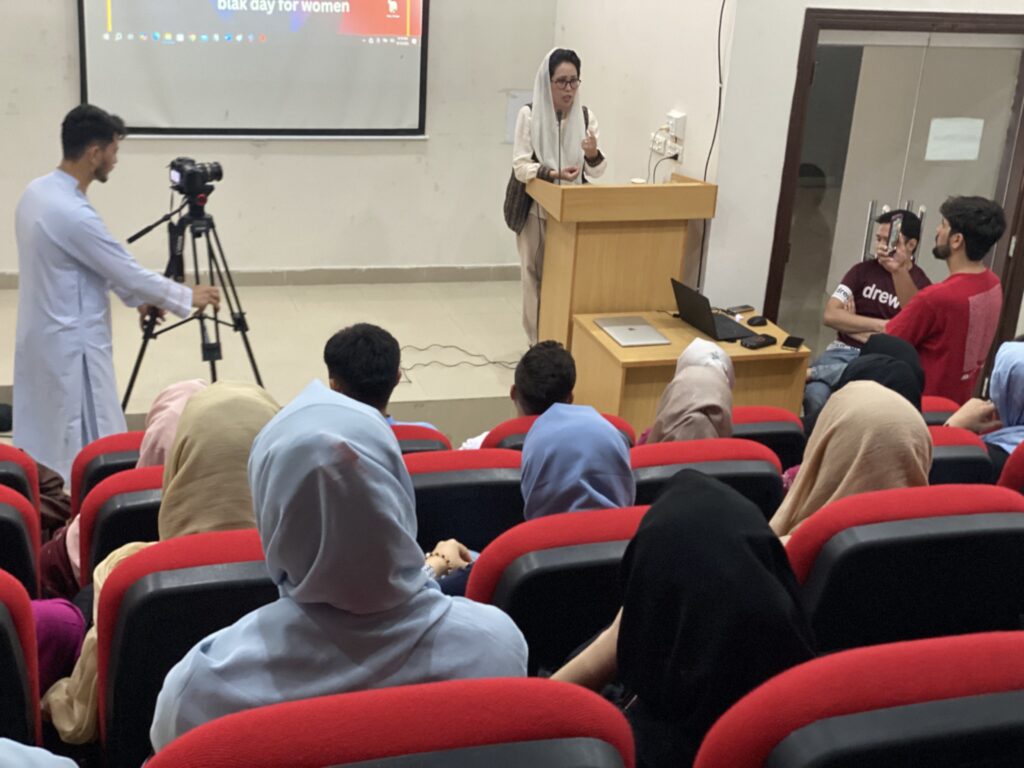
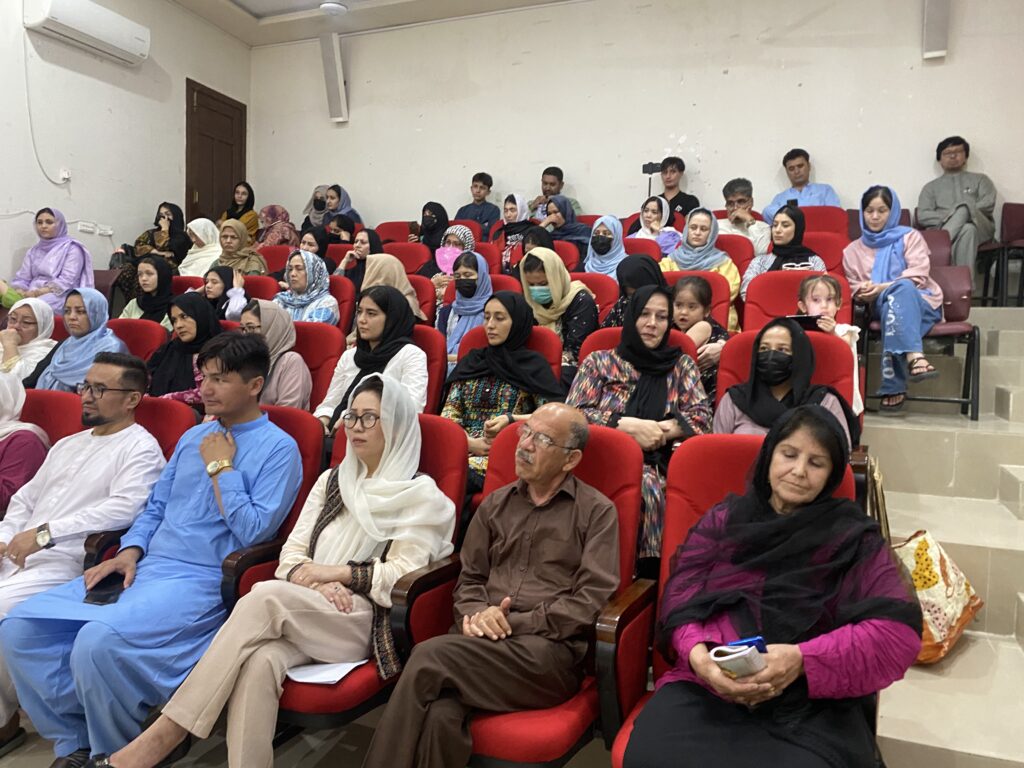
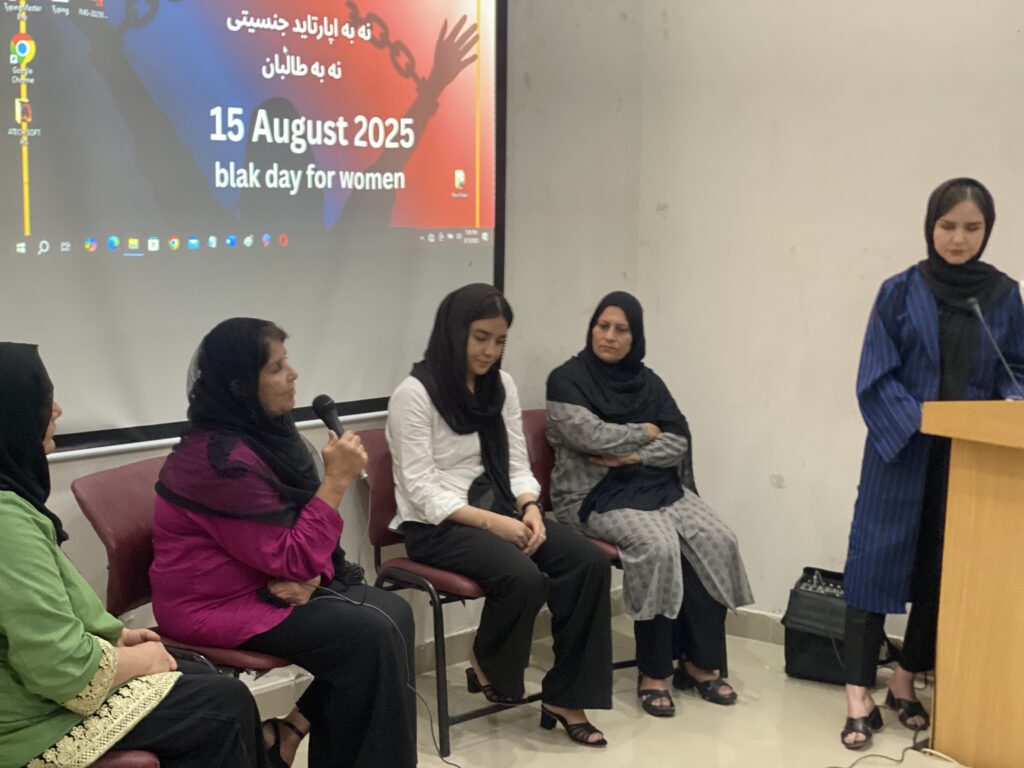
Special Event Marking the Fourth Anniversary of the August 15 Developments in Afghanistan, Organized by the Afghananistan Women’s Movement in Exile in Pakistan
On August 15th, commemorating the fourth anniversary of the developments in Afghanistan, the Afghan Women’s Movement in Exile in Pakistan convened a special gathering. The program was dedicated to reflecting on the challenges, resilience, and aspirations of Afghan women in the face of ongoing restrictions.
The event commenced with the screening of a documentary that highlighted the lived experiences of Afghan women, many of whom have endured severe limitations, violence, and exclusion since the return of the Taliban. Through powerful imagery and testimonies, the film sought to amplify voices that have too often been silenced, bringing their realities to the attention of participants.
A panel discussion followed, bringing together women’s rights defenders and advocates. While panelists acknowledged the immense hardships resulting from the “fall,” their messages were infused with hope, emphasizing the need for resilience and the search for new avenues of meaningful participation. They stressed that Afghan women and girls should not be resigned to the current circumstances but must continue striving for empowerment and recognition.
Farzana Rezaei, founder of the Afghan Women’s Movement in Exile, remarked:
“After the fall, it was women who continued the struggle and demonstrated that they can no longer be erased.”
She further underlined the importance of unity and solidarity among women, affirming that genuine involvement in decision-making processes must move beyond symbolic inclusion.
The program concluded with the presentation of the Movement’s Resolution, which set forth the following appeals:
Non-recognition of the Taliban as a legitimate governing authority;
Condemnation of the ongoing silence of the international community, which risks being perceived as tacit endorsement;
Formal recognition of the situation in Afghanistan as gender apartheid;
Urgent action to prevent forced displacement and threats of mass atrocity against the Afghan population.
Participants reaffirmed that the voices of Afghan women in exile remain strong and determined. Through storytelling, solidarity, and advocacy, they emphasized their commitment to continuing a peaceful struggle for justice, equality, and dignity.
Do not Recognise Taliban
As an Afghan woman, I cannot recognize the Taliban as a legitimate government. Their rule has systematically denied women and girls their most fundamental rights: the right to education, to work, to participate freely in public life, and to shape the future of their own country. To recognize them would not only be a political act but also a betrayal of justice, dignity, and equality. It would mean accepting a system that has silenced half the population and condemned millions of Afghan women to invisibility.
The international community must remain firm. Legitimacy should never be granted to those who close the doors of schools to girls, who bar women from employment, and who erase them from every sphere of decision-making. Recognition is not a neutral act—it carries moral weight. It signals whose voices matter, whose rights are protected, and whose suffering is acknowledged.
By withholding recognition, the world can send a powerful and necessary message: that Afghan women’s voices are not forgotten, that our rights are inseparable from universal human rights, and that justice must come before power. To stand with Afghan women is to affirm that equality, dignity, and freedom cannot be bargained away for short-term political expediency.
We call on the international community to uphold its responsibility—to condemn gender apartheid in Afghanistan, to amplify the voices of women in exile and inside the country, and to act urgently to prevent further violations of our rights. Non-recognition is more than a political stance; it is a moral imperative. It is a promise that the world will not legitimize oppression, but instead will stand with Afghan women until justice and equality prevail.
Statement of the Movement of Afghanistan Women in Exile On the Recent Ruling of the International Criminal Court Against Taliban Leaders
The Movement Afghanistan Women in Exile : welcomes the recent decision by the International Criminal Court (ICC) against certain leaders of the Taliban. We view this ruling as a hopeful step toward justice, accountability, and the formal recognition of the crimes committed against the people of Afghanistan — especially its women.
At a time when the Russian Federation ignores the Taliban’s structural atrocities by officially recognizing this terrorist group, and while the United Nations holds ambiguous, victim-neglecting political dialogues on Afghanistan’s future, the issuance of this ruling by an international judicial body kindles a spark of hope in the hearts of millions of Afghan women and girls — those whose very existence, rights, and human dignity have been denied and trampled by the Taliban.
However, the Movement Afghanistan Women in Exile : warns that this ruling must not remain merely symbolic. It must be followed by the establishment and activation of an independent international judicial committee that can accelerate the legal proceedings, ensure implementation, and guard against political maneuvers aimed at sanitizing the image of the Taliban.
We, the women of Afghanistan — standing at the forefront of the struggle against Taliban tyranny — join voices with other human rights organization to insist that justice must not remain ink on paper. It must be enacted in reality — so the world may understand: forgetting the victims and pardoning the perpetrators can never be a legitimate path forward.
The Movement Afghanistan Women in Exile

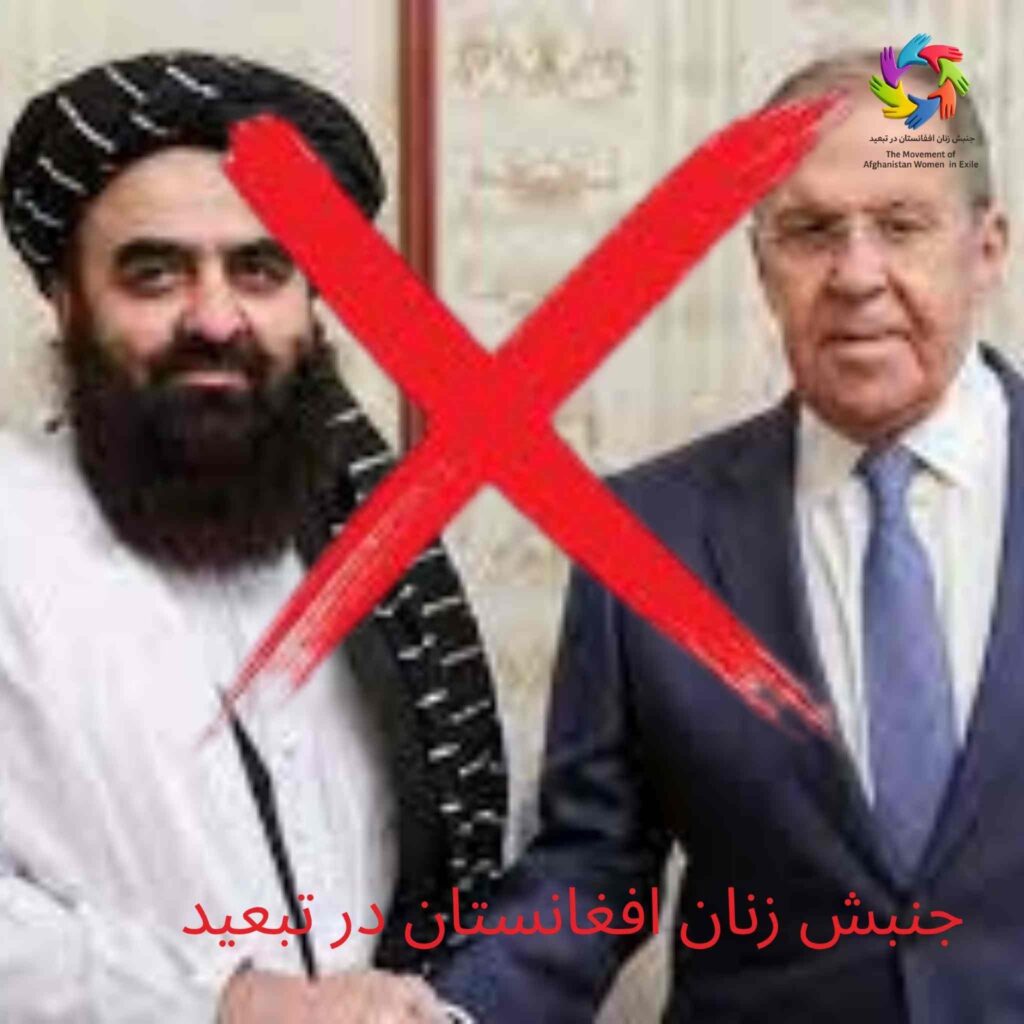
Statement by the Movement of Afghanistan Women in Exile: In Response to the Recognition of the Taliban by the Russian Federation
With deep outrage and sorrow, the Movement of Afghanistan Women in Exile strongly condemns the disgraceful act by the Russian Federation in recognizing the Taliban’s terrorist regime as a legitimate government.
A serious question arises: On what legal, ethical, or humanitarian grounds does Russia recognize a fascist, misogynistic, and terrorist group whose hands are stained with the blood of thousands of innocent people and who bear full responsibility for the destruction of an entire nation?
Is this recognition based on:
• The systematic crimes against civilians?
• The total exclusion of women and girls from education, employment, and basic freedoms?
• The brutal suppression of minorities, journalists, artists, and civil activists?
• The forced displacement of millions of citizens, creating one of the largest humanitarian crises of the century?
• The creation of fear, humiliation, and hopelessness for Afghan refugees in neighboring countries?
We, the women of Afghanistan—living in exile and stripped of our most basic human rights—consider this decision not only a betrayal of human rights values but also an act of legitimizing one of the most misogynistic and anti-human regimes in modern history.
The Russian Federation, a country that claims to respect international law and equal rights for its own citizens, has with this move distanced itself from fundamental principles of human rights and aligned itself with the forces of oppression, terror, and gross violations of human dignity.
We demand the immediate reversal of this shameful decision.
Furthermore, we call on the international community, human rights organizations, the European Union, and all democratic nations to:
• Condemn this reckless action by Russia.
• Sanction the Russian Federation for supporting a terrorist regime.
• Refuse to normalize relations with the Taliban and prevent the consolidation of a misogynistic and rights-abusing regime in the region.
The Afghan Women’s Movement in Exile stands firmly, with all its strength, alongside the millions of oppressed Afghan women and men, and we will resist any attempt to legitimize this criminal group.
Long live the struggle of Afghan women.
Down with the legitimization of tyranny and terror.
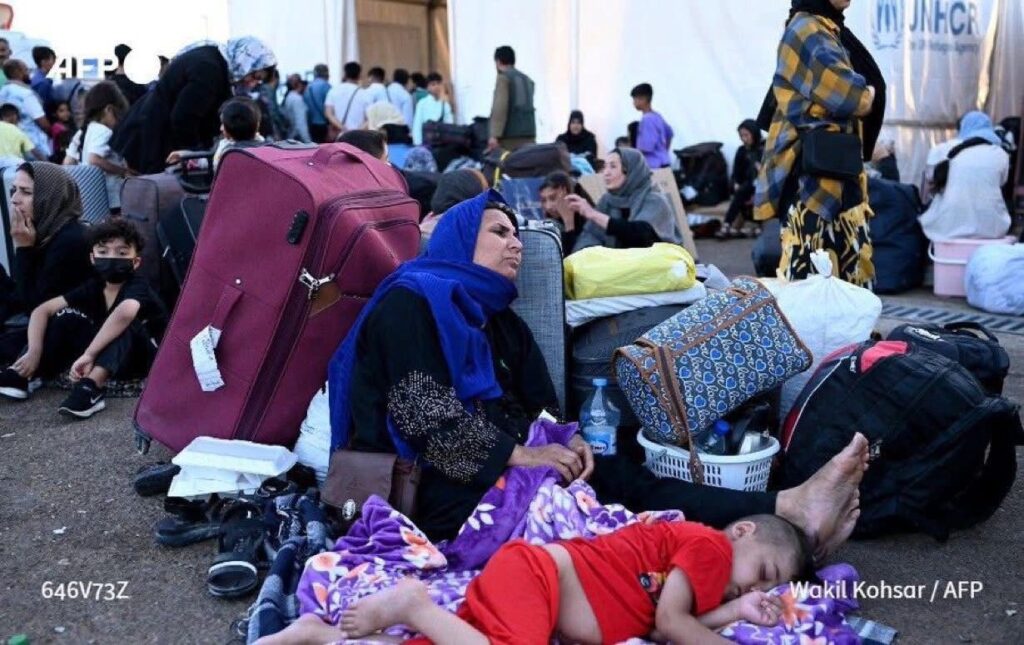
Statement by the Movement of Afghanistan Women in Exile in Response to the Forced Deportation of Afghan Refugees by the Islamic Republic of Iran
The Movement of Afghanistan Women in Exile expresses its deep concern and sorrow over the new wave of forced deportations of Afghan refugees by the Islamic Republic of Iran, which is taking place amidst the dire political and security crisis in Afghanistan. We strongly condemn these actions.
At a time when our country is under the complete control of the Taliban—where there is no space for safety, freedom, or human dignity—and Afghan women and girls are deprived of their most basic human rights, Iran’s mass deportation of refugees is not only immoral and inhumane but also a blatant violation of international principles and obligations regarding the protection of asylum seekers and displaced persons
Thousands of Afghan women, men, and children who fled due to threats of violence, torture, gender-based persecution, and the stripping of their freedoms are now being forcibly returned to Afghanistan by the Iranian government—without any safe prospect of return. For them, especially women and girls, what awaits in Afghanistan is oppression, humiliation, repression, and often, death
The Islamic Republic of Iran—despite its deep-rooted linguistic, religious, and cultural ties with the people of Afghanistan—has not only failed to uphold any moral or humanitarian responsibility toward Afghan refugees, but has systematically violated their human dignity through discriminatory, violent, and degrading treatment
We, the Movement of Afghanistan Women in Exile declare:
The forced deportation of Afghan refugees by Iran is a humanitarian crime and a clear violation of the fundamental principle of non-refoulement
We call on the United Nations, the UNHCR, international human rights organization, and responsible governments to immediately intervene to stop this unlawful and dangerous practice.
We urge the global civil society and international media to stand with Afghan refugees, amplify this blatant injustice, and help break the world’s silence on their suffering
We demand the establishment of urgent and effective protective mechanisms for Afghan refugees—especially women—who are repeatedly subjected to violence and oppression at home, on the streets, at the borders, and in refugee camps
Afghanistan has been turned into a hell for its women. Deporting them back to this hell is a return to silent death
We, women in exile, raise our voices
“An Afghan refugee is not a criminal; they are human.
Forced return is complicity with oppression”
With hope for solidarity
the Movement of Afghanistan Women in Exile
Statement by the Afghan Women in Exile Movement On the Occasion of June 24 – International Day of Women in Diplomacy
Afghan Women: Erased from the Table, the Field, and Global Memory
While the world commemorates June 24 as the International Day of Women in Diplomacy, and speaks of women’s participation in global decision-making, we – the women of Afghanistan – raise our voices in pain for a truth that remains hidden or ignored by the world.
Today in Afghanistan, not only is diplomacy absent, but women have been erased from public life.
They have been pushed out of negotiating tables, the education system, workplaces – even out of the streets and marketplaces.
The Taliban, through their misogynistic policies, have erased women from the public sphere and trampled upon their fundamental rights. Yet the world, through silence, normalization, and the exclusion of our voices from international platforms, has become complicit in this silent crime.
On this International Day of Women in Diplomacy, we ask:
• Where is the place of Afghan women in UN conferences and high-level global meetings?
• Why are the voices of exiled women, refugee women, and women human rights defenders absent from diplomatic dialogues?
• Why are discussions about Afghanistan’s future held without the real and effective participation of Afghan women?
We declare:
• Diplomacy that ignores Afghan women is not legitimate.
• Peace built without women will not last.
• A world that does not mention Afghan women on the Day of Women in Diplomacy has failed the test of justice.
We, the Afghan Women in Exile Movement, demand that:
• The erasure of Afghan women from political and decision-making structures be recognized as a clear violation of human rights.
• The meaningful and independent participation of Afghan women in international conferences on peace, migration, and the future reconstruction of Afghanistan be guaranteed.
• The voices of women in exile who continue to fight for justice be given diplomatic representation and political legitimacy.
Today, we are the voices of women who have been erased from the world – but not silenced.
The Movement of Afghanistan Women in Exile
On the Occasion of June 26 – International Day in Support of Victims of Torture
On the occasion of June 26, International Day in Support of Victims of Torture, the Afghan Women’s Movement in Exile has issued a resolution stating that torture, for them, is not merely a painful memory of the past, but an ongoing and persistent reality.
The resolution states that Afghan women — especially following the طالبان’s takeover — have been subjected to the worst forms of psychological, sexual, and physical violence simply for seeking education, raising their voices in protest, or demanding freedom.
According to the movement, many women have been arrested, flogged, raped, humiliated, and even killed for these reasons.
The resolution further adds that in exile and migration, women face another form of torture: from detention in camps and harsh deportations to statelessness, uncertainty, the constant fear of asylum case rejection, and institutionalized discrimination and humiliation in host countries.
The Afghan Women’s Movement in Exile holds the international community responsible for its silence in the face of these abuses and calls on countries that previously played a role in Afghanistan’s crisis to uphold their human rights commitments.
They demand the reopening of cases concerning crimes against humanity committed against Afghan women, particularly following the سقوط جمهوری (collapse of the Republic).
The resolution concludes:
“Torture is not only a solitary confinement cell; an Afghan woman is tortured in her own home, in flight, at the border, and in the silence of the world. Torture, everywhere and in every form, must end.”
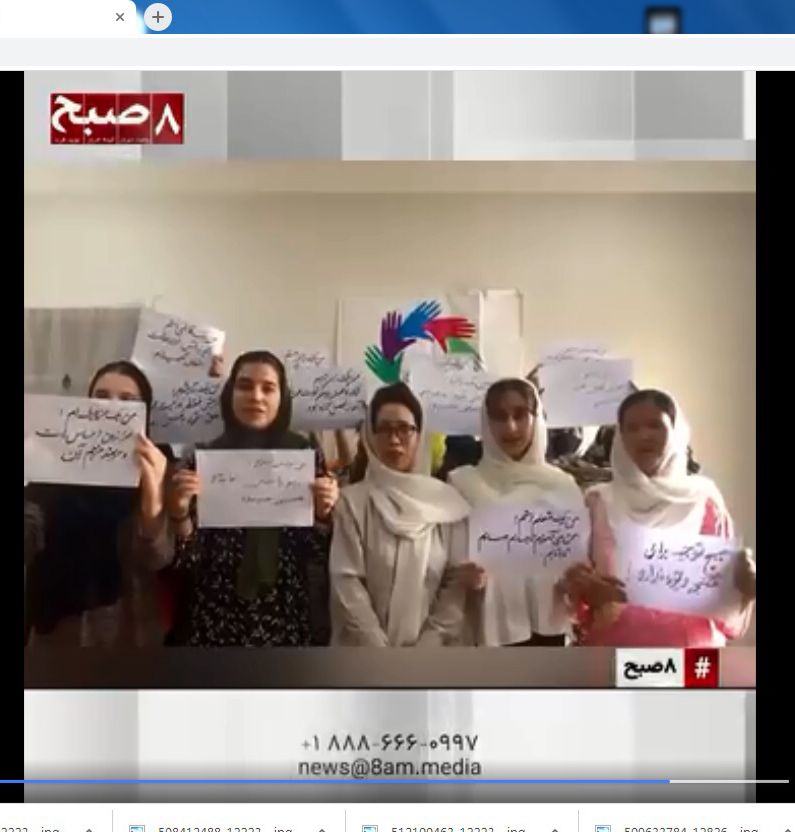
On the Occasion of World Refugee Day (June 20, 2025)
We, a coalition of Afghan organizations, civil society institutions, protest movements, and human rights advocacy groups, through signing this open letter, express our deep concern over the critical situation of Afghan asylum seekers and migrants in Iran and Pakistan.
At a time when millions of stateless, unheard, and unprotected people have been left in limbo — facing the threat of forced return, detention, discrimination, and structural violence — the silence of the international community is unacceptable.
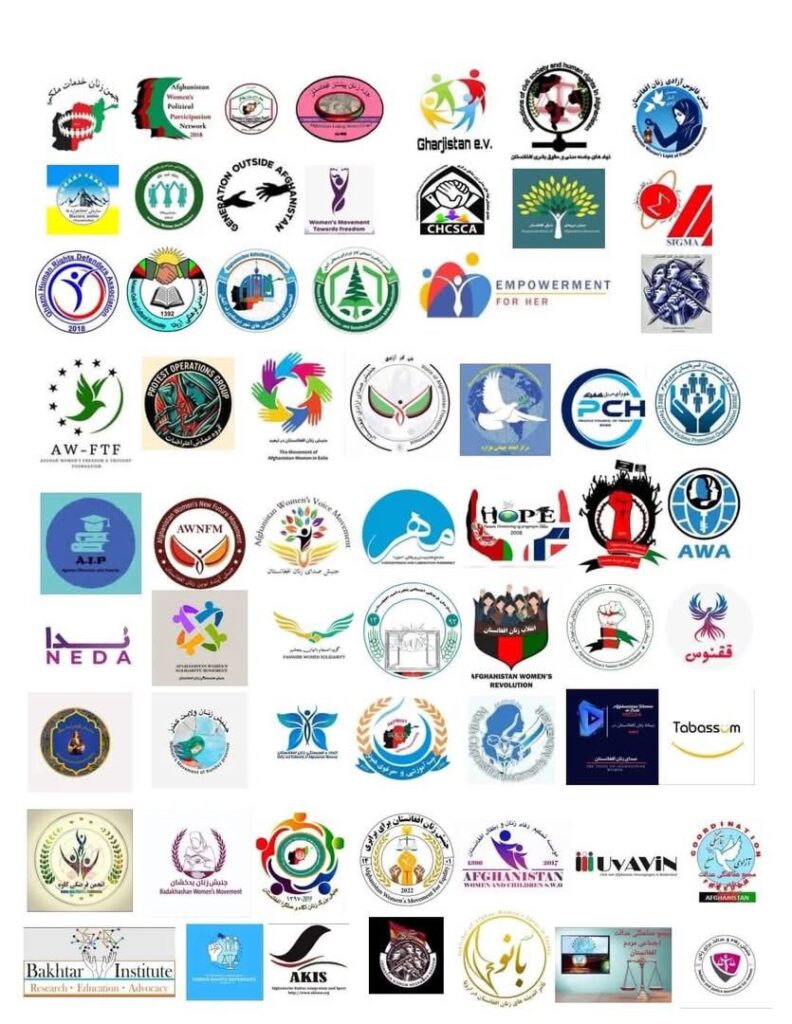
This letter, endorsed by more than 80 organizations, movements, and civil society groups, is addressed to international organizations, member states of UNHCR, and the free media.
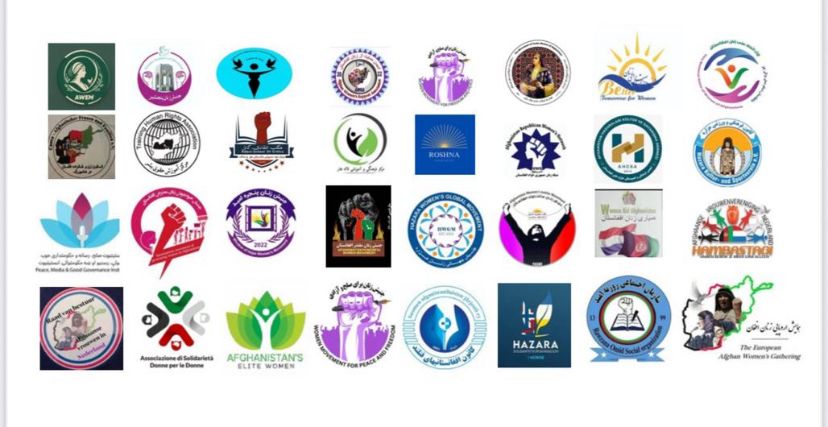
The full version of the letter and the logos of the signatories are attached to this post.
Statement by the Afghanistan Women Movement in Exile On the Occasion of June 20 – World Refugee Day
We, a collective of Afghan civil society organisations, protest movements, and human rights advocacy groups, respectfully extend this open letter to express our deep concern regarding the increasingly precarious situation of Afghan refugees and asylum seekers, particularly in Iran and Pakistan.
At a time when millions remain displaced, without protection or recognition — vulnerable to forced returns, arbitrary detention, discrimination, and systemic violence — we believe the continued silence of the international community is deeply troubling and cannot be justified. This letter, supported by more than 80 organisations, movements, and grassroots groups, is addressed to international agencies, UNHCR member states, and independent media, urging immediate attention and action.
We respectfully urge the United Nations, UNHCR, and all relevant international and regional organizations to engage with increased urgency and seriousness concerning the worsening conditions faced by Afghan refugees and asylum seekers, especially in Iran and Pakistan. These individuals continue to endure forced deportations, arbitrary detention, systemic discrimination, and a lack of access to legal protection.
We call for coordinated, sustained, and rights-based responses that prioritize the safety, dignity, and long-term well-being of Afghan refugees. Immediate steps must be taken to prevent refoulement, expand protection mechanisms, and ensure access to humanitarian assistance and fair asylum procedures.
We also appeal to the international community, donor governments, and civil society to amplify this call and stand in solidarity with those whose voices are too often silenced.
We sincerely invite you to assist in its dissemination, and to stand in solidarity with Afghan refugees who continue to endure grave risks and uncertainty.
Eid al-Adha Message of Congratulations
On the arrival of Eid al-Adha — this great celebration of faith, sacrifice, and perseverance — I extend my heartfelt congratulations and warmest wishes to all courageous women, suffering families, and freedom-loving people of Afghanistan, both inside the country and in exile.
Eid al-Adha comes at a time when the women of Afghanistan continue to live under the shadow of deprivation, discrimination, and enforced silence. Yet despite all these pressures, their voices of resistance, awareness, and struggle have not been silenced — and will not be silenced.
The values of this sacred holiday are reflected today in the daily lives of women who, despite systematic exclusion, continue to fight for justice, education, freedom, and their fundamental human rights.
On this spiritual day, we honor the resilience and resistance of all deprived women of our homeland and call upon the international community to stand alongside the rightful demands of Afghan women and not ignore their suffering.
May this year’s Eid al-Adha bring the promise of a day when justice, freedom, and human dignity are realized for all women of Afghanistan.
With hope for a bright and equal tomorrow,
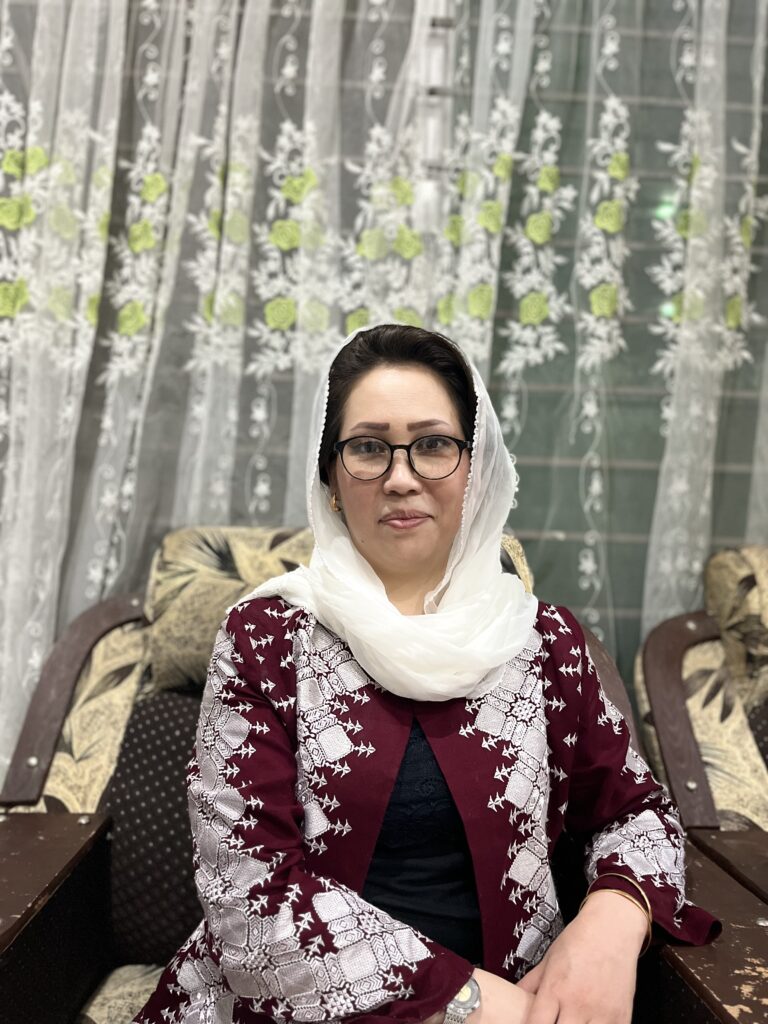
Farzana Rezai
Founder, Afghan Women’s Movement in Exile
Statement of the Movement of Afghanistan Women in Exile : In Response to the Arrest of Girls and Women in Shahr-e-Naw, Kabul
The Movement of Afghanistan Women in Exile :strongly condemns the arbitrary arrest of several girls and women in the Shahr-e-Naw district of Kabul by Taliban forces. This incident is yet another example of the Taliban’s systematic campaign to erase women from public life—an agenda they have aggressively pursued over the past four years in Afghanistan.
We emphasize that depriving women of their rights to education, work, freedom of movement, and public participation is a flagrant violation of fundamental human rights and contradicts Afghanistan’s obligations as a member of the United Nations under international treaties and conventions.
According to Article 24 of the 2004 Constitution of the Islamic Republic of Afghanistan:
“Liberty is the natural right of human beings. This right shall not be limited without the provisions of the law.”
Article 44 of the same constitution obliges the state to design and implement effective programs for the education and improvement of women’s lives.
Article 54 states that the family is the fundamental unit of society, and the state is obliged to ensure the rights and protection of its members—especially women and children.
The Taliban, through an environment of fear and repression, have effectively barred women and girls from education, employment, civic participation, and even physical presence in urban spaces. These actions stand in clear contradiction to the Universal Declaration of Human Rights (Articles 2, 7, and 26), the Convention on the Elimination of All Forms of Discrimination Against Women (CEDAW), and the Cairo Declaration on Human Rights in Islam.
We consider these actions not only as violations of the individual rights of women but as part of broader crimes against humanity. The Taliban must be held accountable for unlawful detentions, intimidation of families, and threats to young girls seeking access to education and a free life.
We call on international institutions—the United Nations, the UN Human Rights Council, UNESCO, and all defenders of human rights—to:
• Officially recognize the situation of Afghan women as gender apartheid;
• Increase political, diplomatic, and legal pressure on the Taliban;
• Ensure the meaningful inclusion of Afghan women in national and international political dialogues.
Afghan women, both inside the country and in exile, will not surrender. We stand united with our sisters and remind the world:
Silence in the face of oppression is complicity.
نامه سرگشاده رسمی نهاد های جامعه مدنی
۹۶ نهاد جامعه مدنی، جنبش های اعتراضی و گروه های حقوق بشری از داخل و خارج از کشور نامه سرگشاده رسمی به سه زبان فارسی، انگلیسی و آلمانی منتشر کرده اند. در این مکتوب به رسمیت شناختن طالبان به صورت واضح بیان می کنند و در عین حال به ادامه اخراج اجباری پناهجویان افغان هشدار می دهند.
نامه های امضا شده توسط سازمان ها در زمینه های حقوق بشر، حقوق زنان، مهاجرت و عدالت انتقالی به نهادهای بین المللی، دولت های اروپایی (از جمله آلمان) و همچنین رسانه های جهانی ارسال شده است.
این اقدام مشترک خطرات عادی سازی روابط با طالبان را برجسته می کند: نقض سیستماتیک حقوق بشر، آپارتاید جنسیتی، تبعیض قومی، محرومیت مخالفان سیاسی و بازگشت اجباری پناهجویان به افغانستان تحت رهبری طالبان.
لوگوهای رسمی تمام ۹۶ سازمان به حروف ضمیمه است متن کامل به سه زبان موجود است
از همه رسانه ها و موسسات همفکر می خواهیم پیام ما را به پیش ببرند.
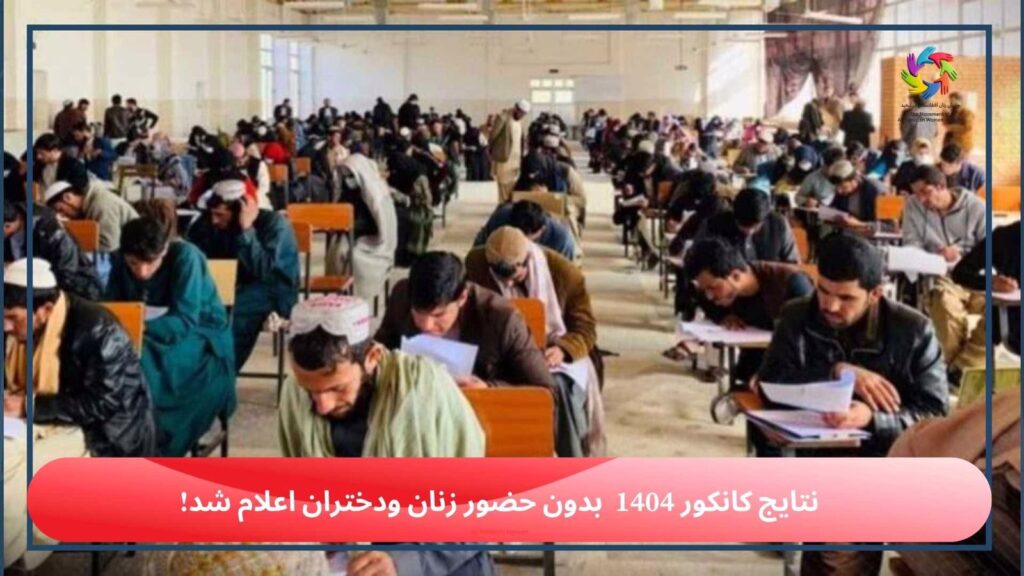
قطعنامه اعتراضی جنبش زنان افغانستان در تبعید در واکنش به اعلام نتایج کانکور بدون حضور زنان
جنبش زنان افغانستان در تبعید، با قاطعیت تمام، اعلام نتایج امتحان سراسری کانکور از سوی گروه طالبان را که برای چهارمین سال پیاپی بدون درنظرگرفتن حق تحصیل زنان و دختران صورت گرفته است، محکوم میکند. این تصمیم نهتنها نمونهی آشکار آپارتاید جنسیتی است، بلکه بازتاب یک سیاست سیستماتیک برای حذف زنان از حیات فکری، اجتماعی و سیاسی کشور است.
طالبان در حالی زنان را از آموزش عالی محروم کردهاند که آنان نیمی از جمعیت کشور را تشکیل میدهند. هیچ نظام، دین، یا قانون مشروعی در جهان، نمیتواند تبعیضی چنین گسترده و هدفمند را توجیه کند. اگر طالبان بهنام دین، زنان را از تحصیل محروم میکنند، این نه نشان ایمان، بلکه نشانهی جهل، سوءاستفاده از مفاهیم دینی، و استفاده ابزاری از دین برای تحکیم سلطهی مردسالارانه است
اسلام در ذات خود جویای علم است. نخستین آیهاش با واژه «اقرأ» آغاز میشود. پیامبر اسلام همواره بر آموزش همگانی تأکید داشت — زن و مرد، غنی و فقیر. پس توجیه طالبان مبنی بر ممنوعیت آموزش زنان بهنام اسلام، نهفقط تحریف آشکار دین است، بلکه توهین مستقیم به آموزههای اصیل اسلامی است
طالبان، بهعنوان یک گروه مسلح غیرمردمی، در عمل نه به قوانین داخلی افغانستان پایبندند، نه به کنوانسیونهای بینالمللی مانند کنوانسیون رفع تبعیض علیه زنان (CEDAW)
: میثاق بینالمللی حقوق اقتصادی، اجتماعی و فرهنگی، و نه حتی به اصول ابتدایی اخلاق و انسانیت
این گروه با سیاستهای زنستیزانهاش، در تلاش است تا با حذف نیمی از جامعه، تاریکی جهل را بر تمام افغانستان حاکم سازد. اما این خیال باطل است. نه تاریخ چنین جنایتی را میپذیرد، و نه وجدان بیدار نسل ما در برابر آن سکوت خواهد کرد.
ما اعلام میکنیم”
1:سیاست حذف سیستماتیک زنان از تحصیل، جنایت علیه بشریت و نمونه بارز آپارتاید جنسیتی است؛
2:طالبان نه نماینده مردم افغانستاناند و نه مشروعیت اخلاقی، قانونی یا دینی دارند؛
3:جامعه جهانی در قبال این فاجعه تاریخی، مسئول است و سکوت آن، شراکت در جنایت است؛
4:ما خواهان تحریم دیپلماتیک طالبان، پیگرد قانونی عاملان سیاستهای تبعیض جنسیتی، و تشکیل 5:هیأت حقیقتیاب بینالمللی در مورد وضعیت زنان در افغانستان هستیم
جنبش زنان افغانستان در تبعید، بهعنوان صدای زنان سرکوبشده، اعلام میکند
ما سکوت نمیکنیم، ما فراموش نمیکنیم، و ما از عدالت نمیگذریم
تا روزی که دختران ما دوباره پشت دروازههای دانشگاه بایستند،
ما در میدان مقاومت خواهیم بود — بیوقفه، بیهراس، بیتسلیم”
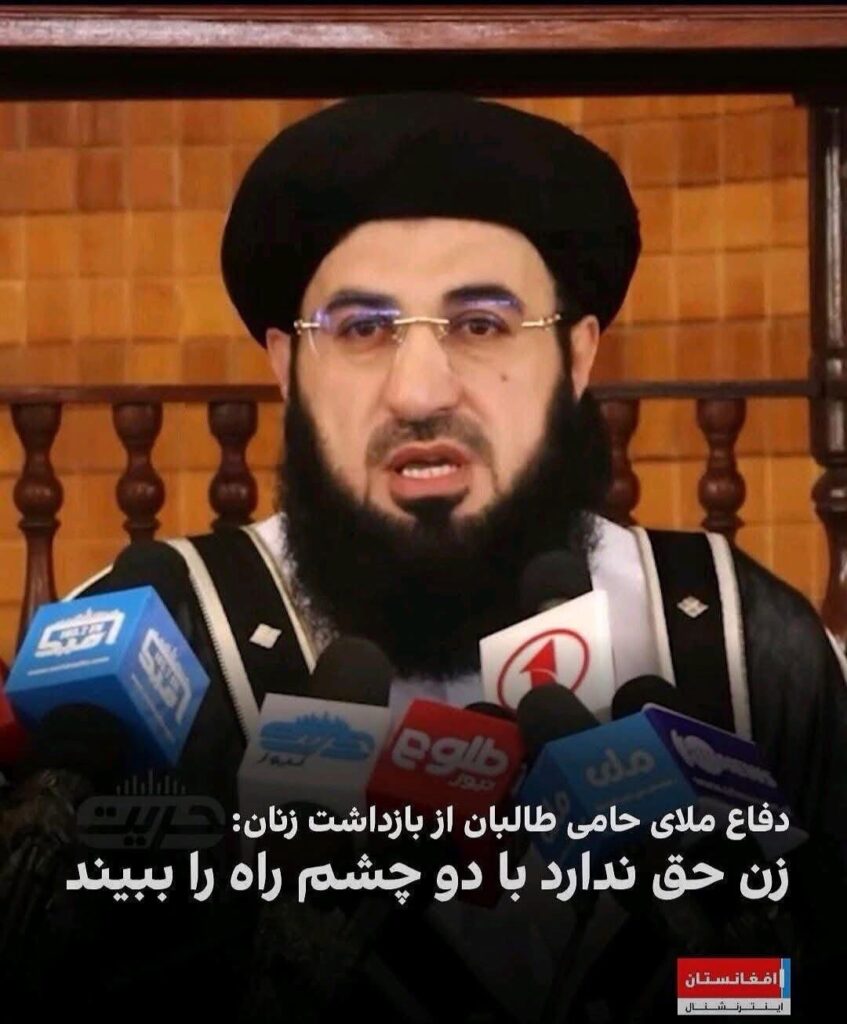
دفاع ملا حامی طالبان از بازداشت زنان: زن حق ندارد با دو چشم را ه را ببیند
گروه که آهسته آهسته از وجود زنان در افغانستان انکار خواهی کرد. تا حالا صدای شان عورت بود اما حالا چشمان شان نیز مشکل برای این گروه زندستیز است . زنان با صدای شان حقیقت طالبان را به نمایش گراشت حالا ترس از چشمان شان دارد . با چشمان شان چهره واقعی از تروریست بودن شما را ثبت تاریخ خواهی کرد.
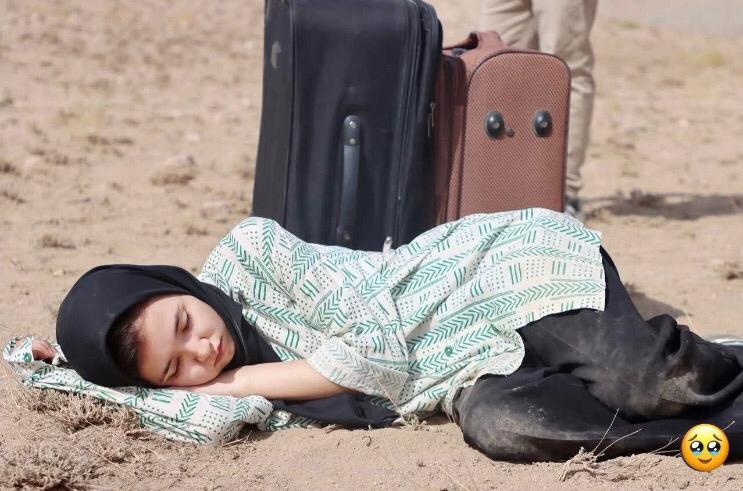
الهام از جنگل برای زنان افغانستان
در دل هر جنگل، داستانی پنهان است؛ داستانی که فقط گوشهای آرام میشنود و چشمهای امیدوار میبیند.
بسیاری تصور میکنند «قانون جنگل» یعنی زورگویی و نابودی ضعیفترها،
اما اگر با دقت به زندگی درختان و پرندگان و حیوانات نگاه کنی، میبینی که راز بقا همکاری و همدلی است.
درختان جنگل هیچوقت با هم دشمنی نمیکنند؛
شاخههایشان شاید به هم برسند، اما ریشههایشان در زیر خاک یکدیگر را میبوسند و آب و مواد غذایی را تقسیم میکنند.
وقتی آتشی از راه میرسد یا طوفانی خشمگین میوزد، تنها جنگلی زنده میماند که درختانش با هم یک دل و یک جان باشند.
امروز زنان افغانستان هم شبیه همین جنگلاند.
سالهاست که طوفانهای بیرحم زندگی، مخصوصاً با سایه سنگین طالبان، شاخههای زندگی ما را لرزانده است.
مدارس بسته شده، کار و آزادی محدود شده، و خانههایمان پر از سکوت و نگرانی شده است.
اما راز ماندن و دوباره شکوفه دادن، درست مثل جنگل، در همکاری ما با هم نهفته است.
تصور کن اگر هر زن افغان، مثل یک درخت استوار، با زنان دیگر دست به دست دهد:
یکی مهارت دوختن لباس دارد،
یکی سواد و آموزش،
یکی شجاعت سخن گفتن،
و دیگری توانایی آرام کردن دلهای شکسته.
وقتی این تواناییها کنار هم جمع شود، ما یک جنگل سبز و زنده میشویم؛
طوفان هرچقدر هم سهمگین باشد، نمیتواند ما را از ریشه بکند.
زنان افغانستان میتوانند با همدیگر کارگاه بسازند، آموزش بدهند، امید را منتقل کنند، و خانههای خاموش را دوباره روشن کنند.
امید، مثل نور خورشید از میان شاخهها، راهش را پیدا میکند حتی اگر آسمان پر از ابر باشد.
باور کنیم که با همکاری، همدلی و ایستادگی آرام، میتوانیم آیندهای بسازیم که دخترانمان در آن دوباره آواز بخوانند،
و جنگل زندگیمان پر از پرندگان آزادی شود.
خواهرم!
هیچ طوفانی ابدی نیست، هیچ زمستانی تا ابد نمیماند.
با هم بودن، دست در دست هم دادن، و باور به فردای روشن،
همان «قانون جنگل» ماست… قانونی که در نهایت زندگی و امید پیروز خواهد شد.
نویسنده تمناسلطانی
Statement of the Movement of Afghanistan Women in Exile On the Occasion of Afghanistan’s Three color Flag Day
The three color flag of Afghanistan – black, red, and green – is more than a state emblem; it is a historic symbol of identity, resistance, and the shared hope of the Afghan people.
For millions of Afghan women and men, this flag has represented the aspirations of freedom, justice, and equality — values now under grave threat beneath a misogynistic, authoritarian, and anti-human regime.
Today, the Movement of Afghanistan Women in Exile: remembers the flag that once flew over rooftops, schools, and sports fields across our homeland. We remember the crushed hopes and the countless sacrifices made in pursuit of dignity and rights. For us, this flag is not just a symbol; it is the voice of generations who fought for the right to education, the right to choose, and the right to live a humane life.
In exile — in camps, in nameless alleys, and on forgotten streets — we Afghan women carry the three color flag in our hearts. On this day, as the current rulers attempt to erase our history, we stand firm and declare:
Our flag is our voice.
We call on the international community, global institutions, and all awakened consciences to recognize the national symbols of the Afghan people — not the symbols of humiliation, terror, and erasure.
The three color flag of Afghanistan is the flag of a future that will rise again — lifted by the hands of women, the will of those in exile, and the enduring hope of generations to come.
The Movement of Afghanistan Women in Exile
Joint Statement on the Occasion of World Refugee Day – June 20, 2025
We, the undersigned, express our deep concern over the deteriorating situation of Afghan migrants residing in Iran and Pakistan, and we do so based on the core principles of human rights and the international obligations of states.
In recent months, credible international reports and on-the-ground sources have documented a sharp escalation in mass deportations, arbitrary detentions, systematic violence, and blatant violations of Afghan migrants’ basic rights.These actions are largely carried out without due legal process, without individual assessment, and without consideration of special or vulnerable circumstances.
As a result of this crisis:
Hundreds of thousands of migrants—including women, children, the elderly, and the sick—have been forcibly returned to Afghanistan without any protection mechanism. This return occurs despite the fact that Afghanistan does not meet any standard for voluntary, safe, or sustainable repatriation.Numerous cases of suicide, severe depression, and psychological collapse have been reported among young migrants.
Sexual violence against women, children, and adolescents—both during deportation and in detention centre’s—is a painful and underreported dimension of this crisis.
Thousands of migrants are deprived of access to education, healthcare, job security, shelter, and the most basic human rights. Migrants are increasingly used as tools of political pressure and diplomatic bargaining in regional disputes, while lacking voting rights, legal protection, or platforms to defend themselves. In addition, many of those deported or under threat of deportation include journalists, human rights defenders, protesting women, former soldiers, and ex-government employees of Afghanistan—groups internationally recognised as being “at serious risk of persecution. ” Forcibly returning these individuals directly violates states’ obligations under international refugee protection.
From the perspective of international law:
Returning individuals to a country where they face torture, persecution, prosecution, or life-threatening danger is prohibited and unlawful.
This principle is grounded in:
The Article 33 of the 1951 Refuge
The Convention (Non Refoulement)
The Convention Against Torture (CAT)
The International Covenant on Civil and Political Rights (ICCPR)
UN Guiding Principles on Internal Displacement and Refugee Protection
Interpretative Guidelines by the UN High Commissioner for Refugees (UNHCR
Furthermore, depriving individuals of a fair asylum process constitutes a violation of the right to due process and human dignity.
We call on the following institutions and states to take immediate action:
The United Nations Secretary-General, UNHCR, OHCHR, Human Rights Council, and the UN Special Rapporteur on the Situation of Afghanistan
The International Committee of the Red Cross and regional oversight bodies
The governments of Iran and Pakistan
All states involved in shaping regional migration policies
Our specific demands are as follows:
Immediate halt to the forced and unlawful deportation of Afghan migrants from Iran and Pakistan, and clear condemnation of these actions.
Full adherence by host states to their international obligations toward migrants, including the right to fair legal process, prohibition of torture, and provision of temporary humane residency until safe alternatives are available. Creation of legal, safe, humanitarian, and emergency pathways for the resettlement of asylum seekers at risk of physical, psychological, or gender-based harm.
Deployment of international observers and fact-finding missions to border areas, migrant camps, and detention centre’s for documentation and reporting.
An end to the instrumentalization of migrants in political and security conflicts—migrants must not be held hostage to regional negotiations.
Strengthening and guaranteeing the support of independent legal, media, and humanitarian institutions in documenting, pursuing, and defending migrant rights.
Ensuring that migrants’ voices are heard in international policymaking, and guaranteeing meaningful representation of migrant communities in consultative and protective frameworks.
In the current context, any silence, delay, or indifference constitutes indirect complicity in the violation of fundamental human rights.
Now is the time for action, accountability, and real support.
With Respect,
Signatories
Report: The Tragic Death of Kobra Rezai, an Afghan Migrant Woman in Iran
Tehran – June 2025 (Khordad 1404)
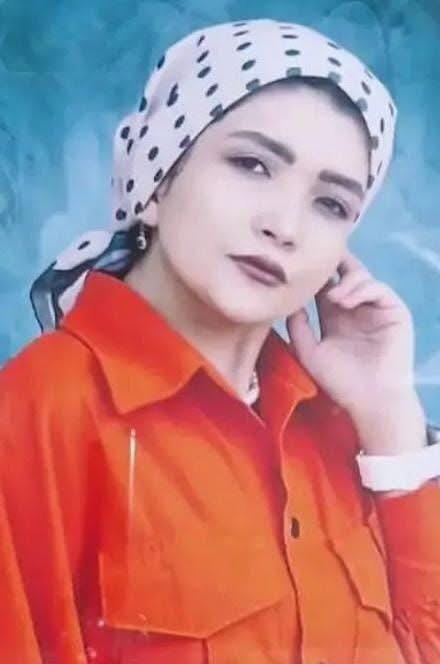
The recent discovery of the remains of Kobra Rezai, a 26-year-old Afghan woman who had been missing for over 40 days, has drawn deep concern from human rights observers, migrant communities, and women’s advocacy groups. Ms. Rezai, a resident of Varamin, was reportedly last seen en route to her place of work. Her dismembered body was later located in the Pishva district, with confirmation from judicial and forensic authorities.
According to family members, parts of Ms. Rezai’s body are still missing, along with her personal belongings, including her mobile phone and identification documents. Police authorities have stated that two individuals have been detained in relation to the case, although further details have not yet been disclosed to the family or the public.
The family has also faced obstacles in obtaining authorization to hold a burial ceremony, raising concerns among civil society actors about the treatment of Afghan migrant families in similar situations.
This tragic incident has taken place against the backdrop of increasing reports of violence, discrimination, and vulnerability experienced by Afghan migrants in Iran, particularly women. Previous cases, including acts of self-harm and public distress by Afghan women, have reportedly received limited official attention, which has prompted calls for more proactive and transparent responses.
Human rights defenders and organizations focused on women and migrants have emphasized that the case of Kobra Rezai represents not only a deep personal loss, but also underscores the broader challenges faced by migrant women in terms of safety, legal protection, and access to justice.
In response, civil society representatives have issued appeals to the Islamic Republic of Iran to:
Conduct a comprehensive, transparent, and impartial investigation into Ms. Rezai’s death;
Ensure that those responsible are held accountable in accordance with the law;
Uphold the safety, dignity, and legal rights of all migrants, particularly women.
Furthermore, the international community, including relevant United Nations agencies and global human rights organizations, is being urged to closely monitor the situation of Afghan migrants in Iran and to consider meaningful support mechanisms, especially for vulnerable groups such as women and girls.
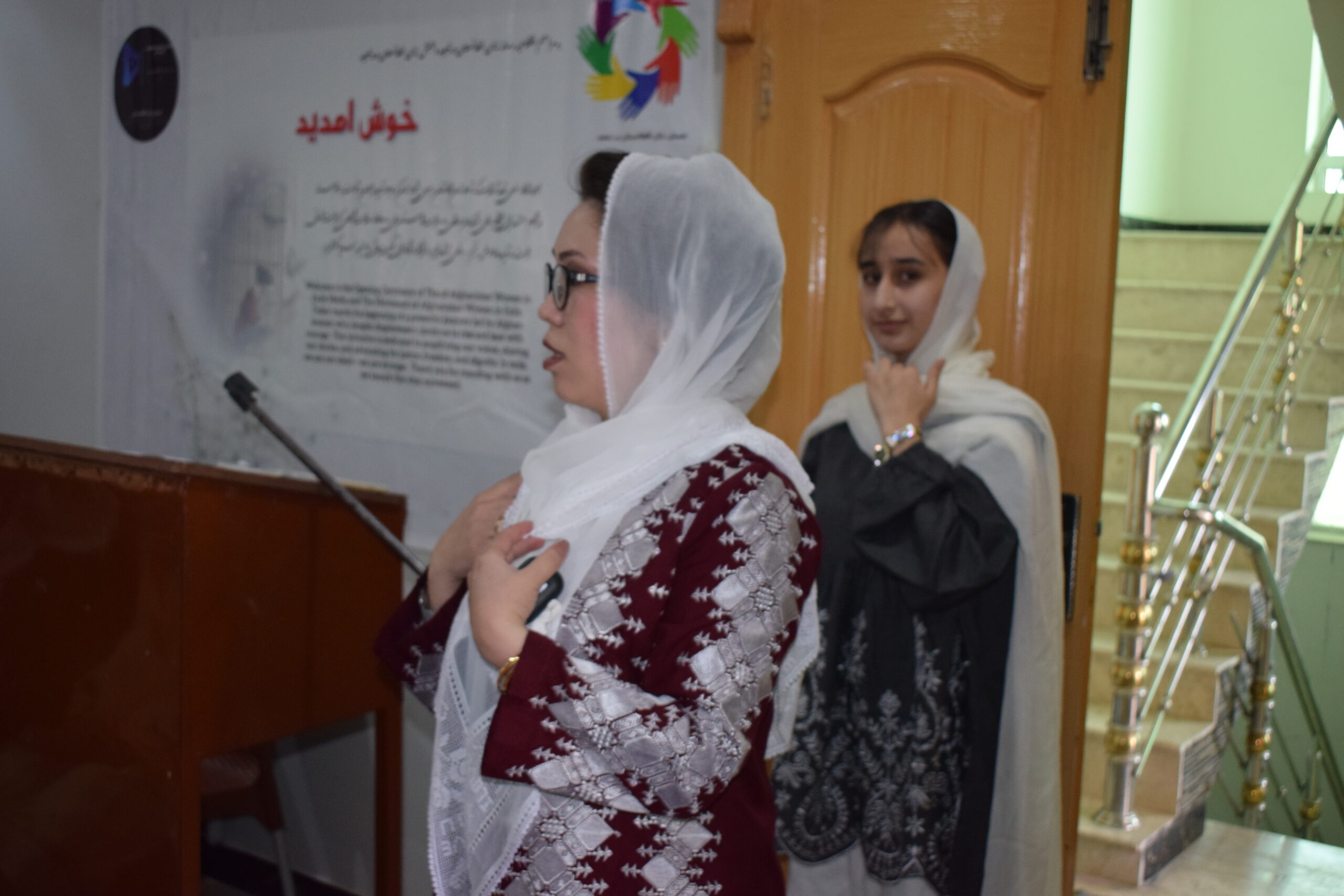
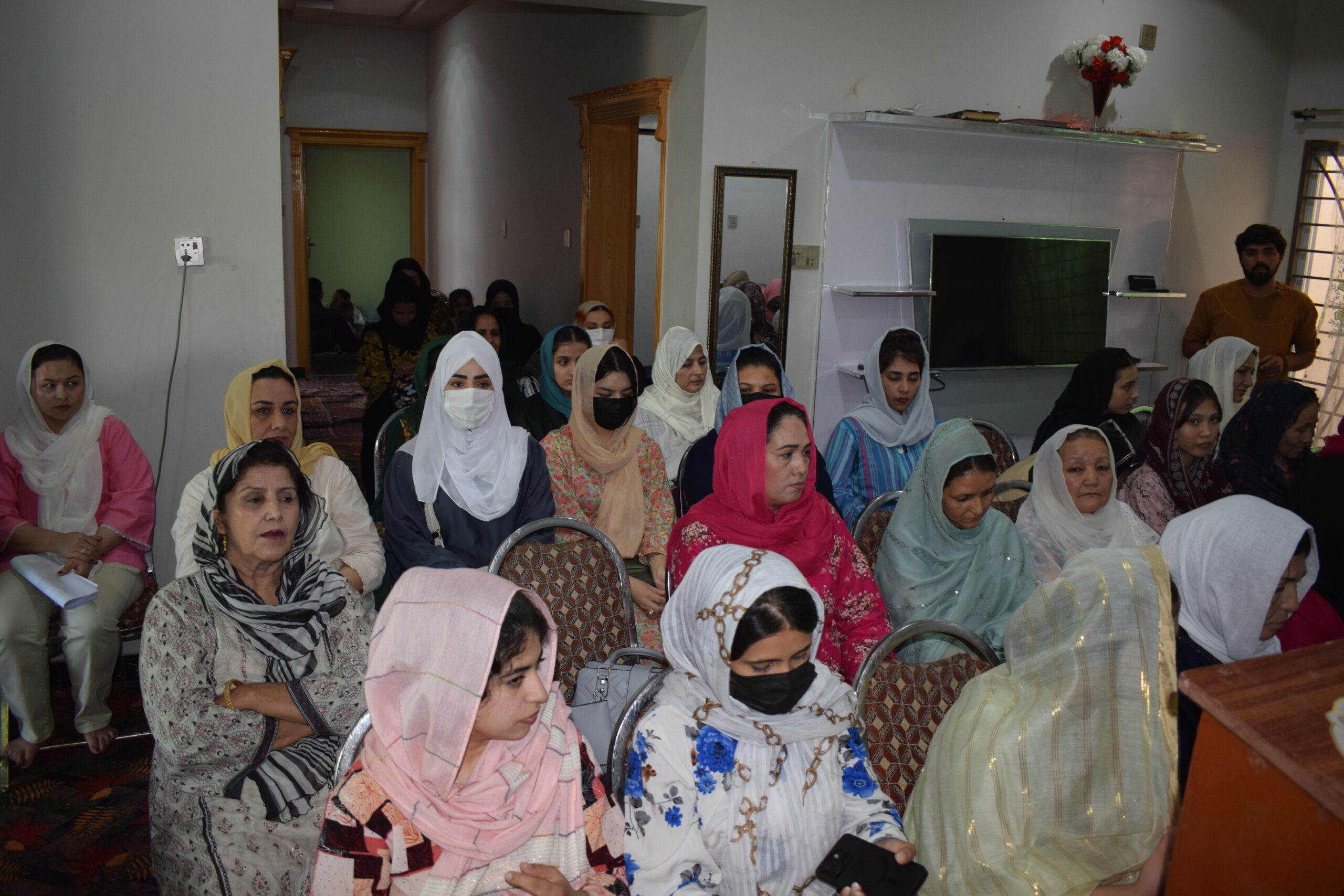
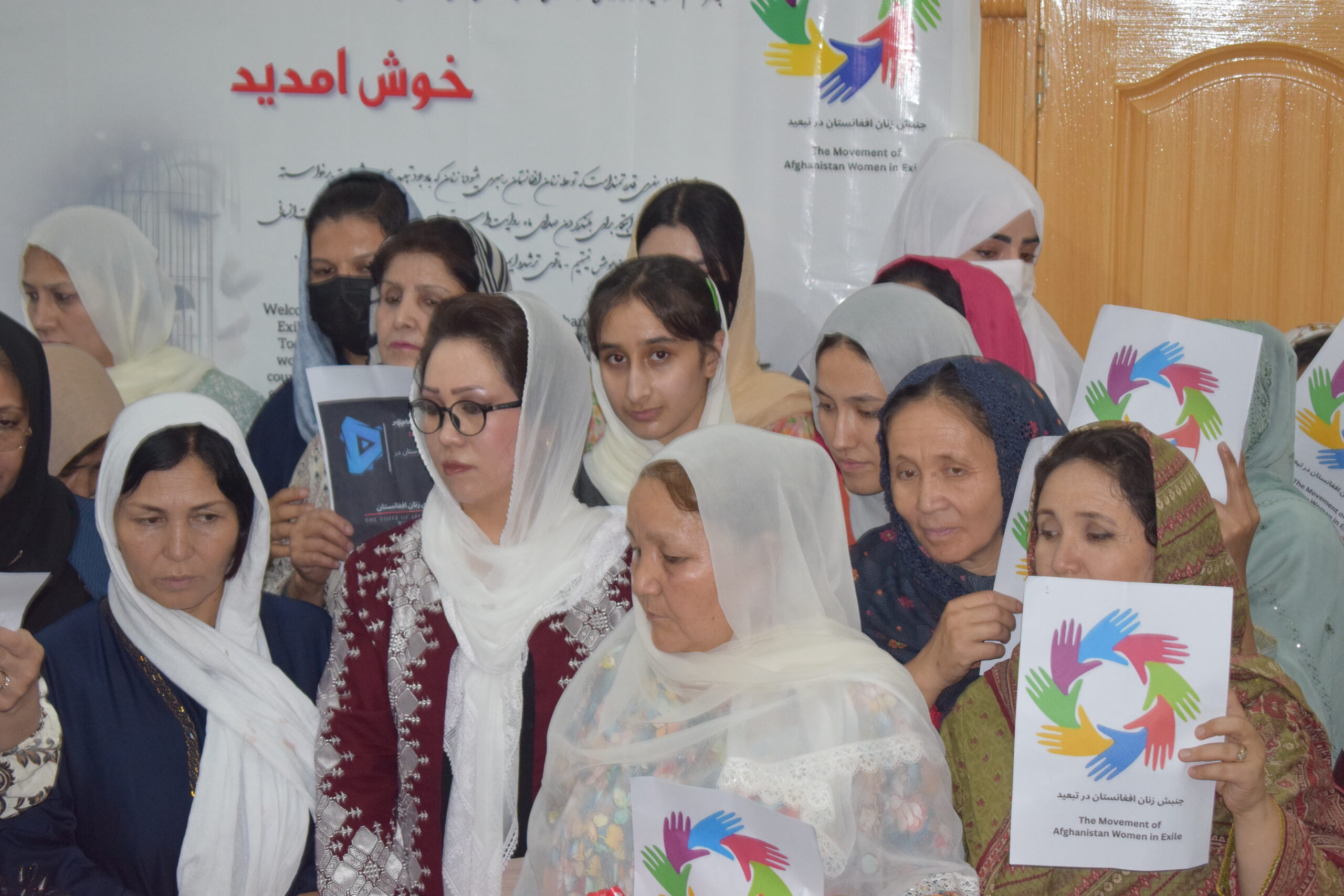
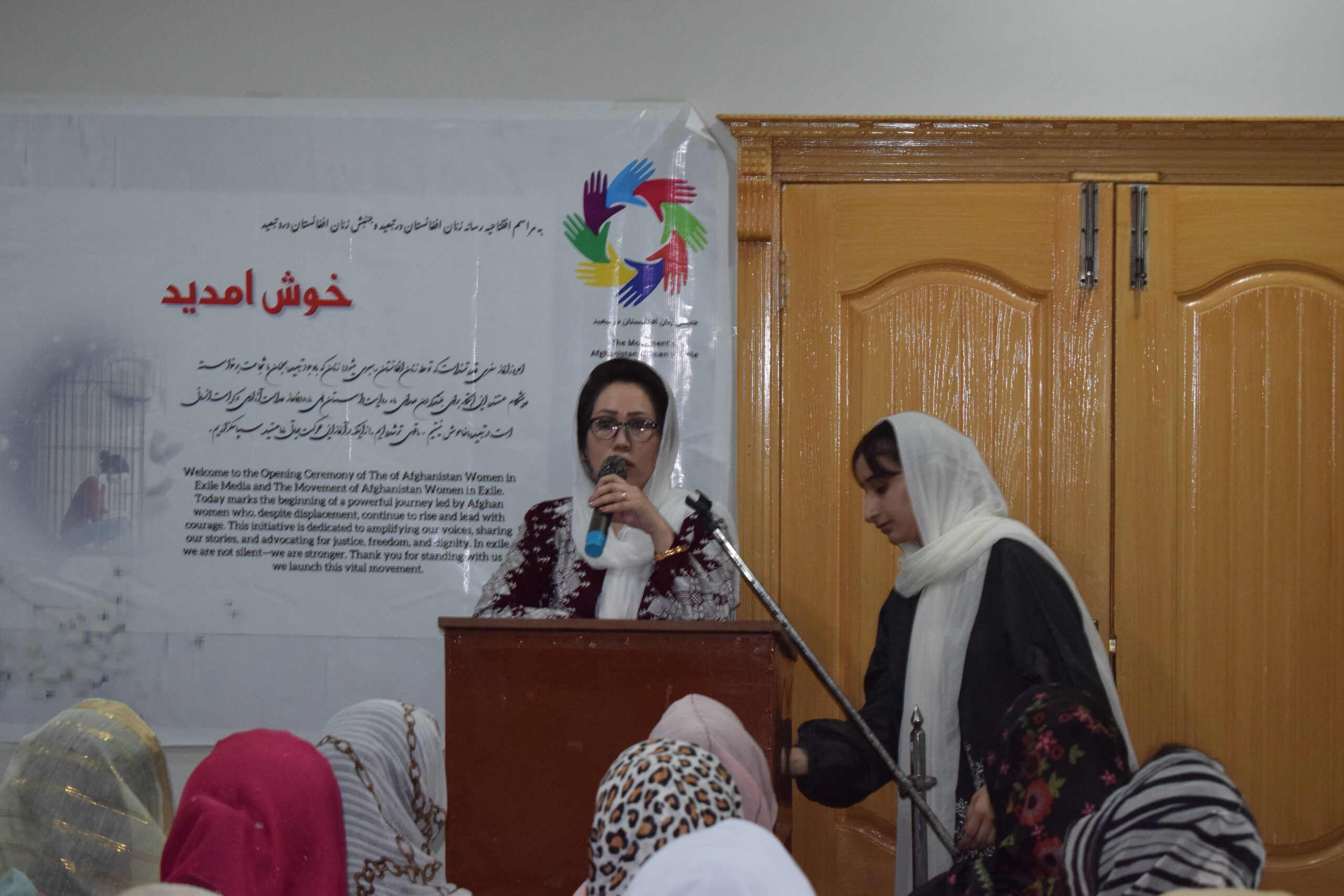
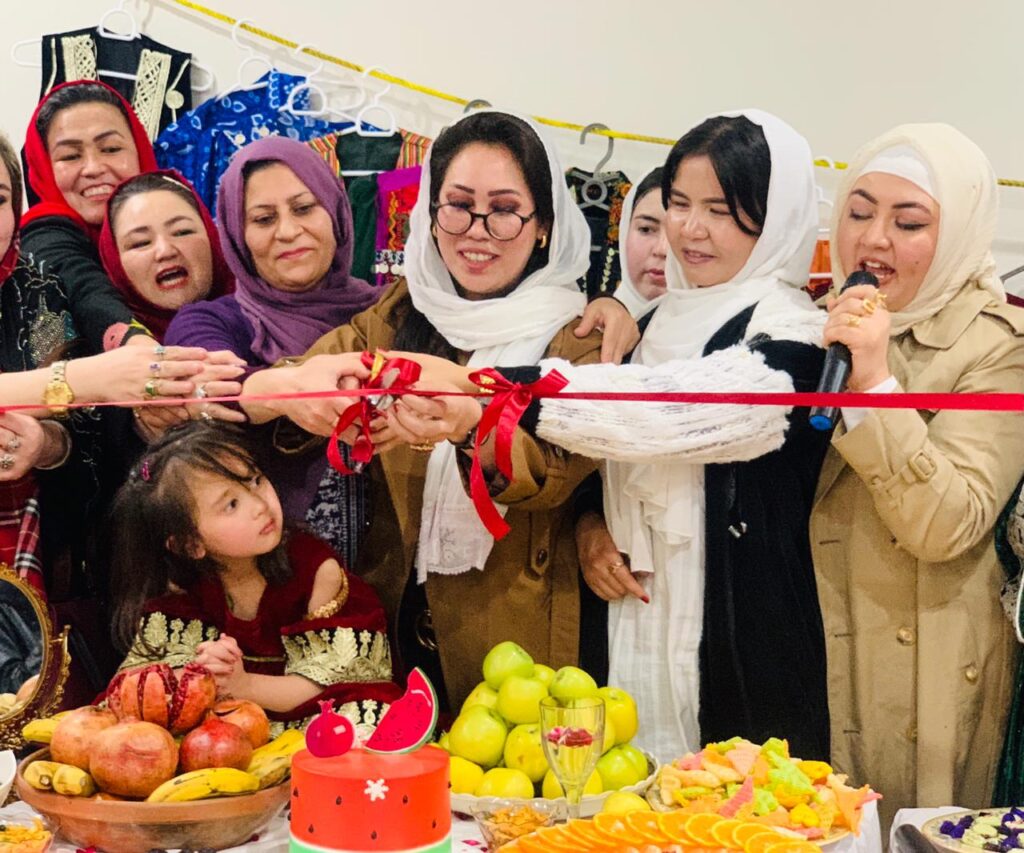
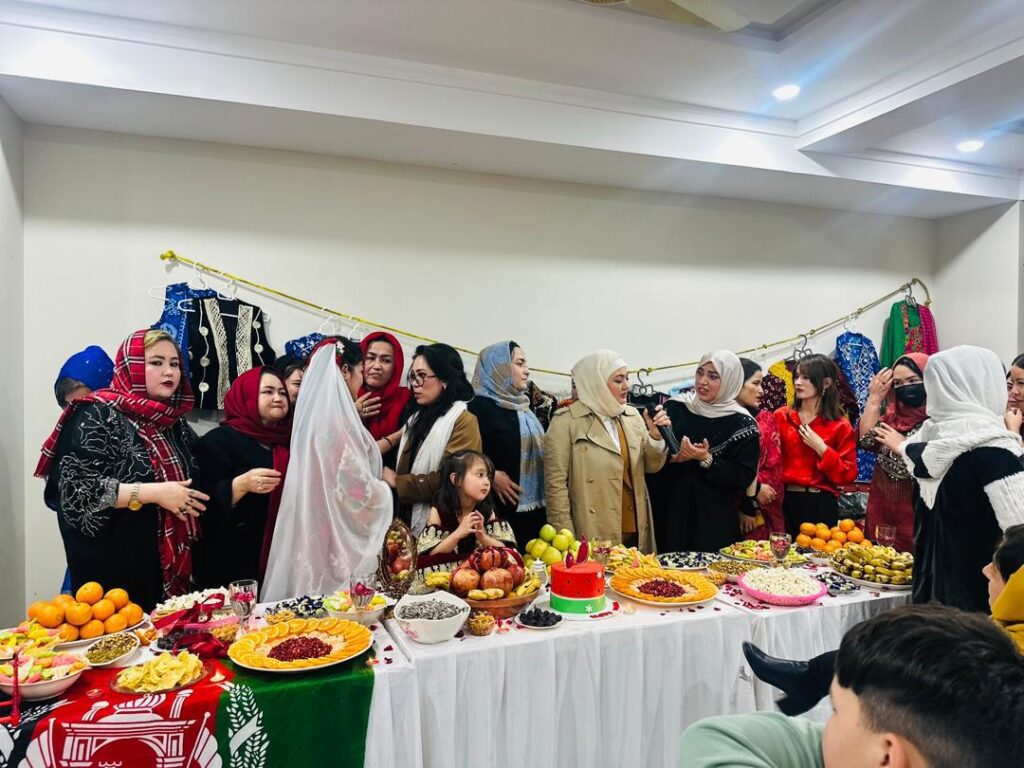
Afghan Women’s Movement in Exile Officially Launched in Islamabad, Introducing Independent Media Platform to Amplify Women’s Voices
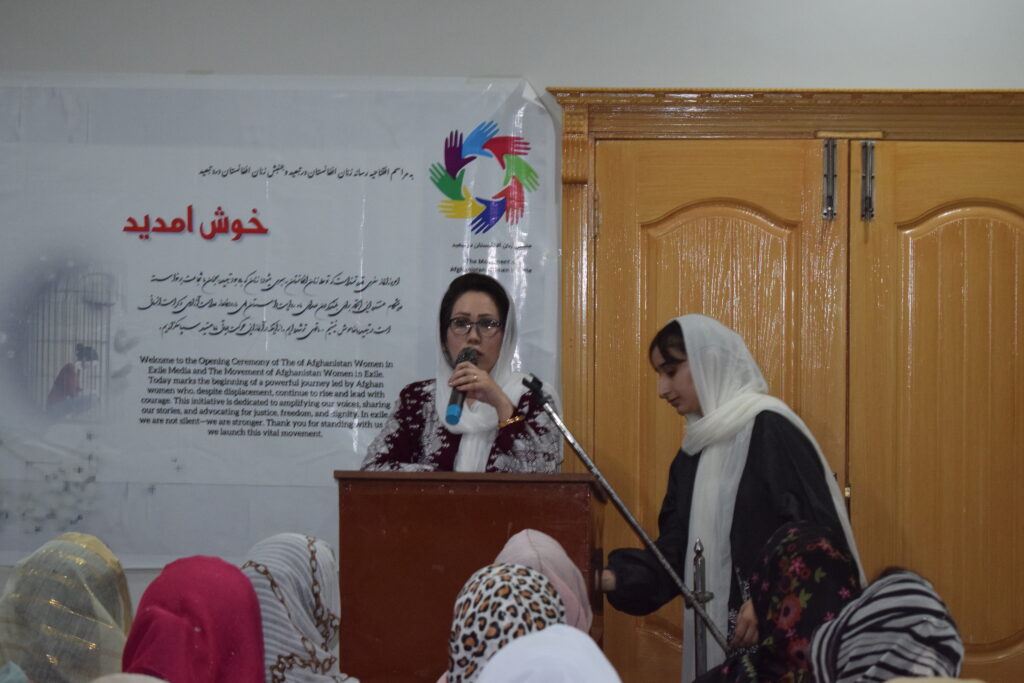
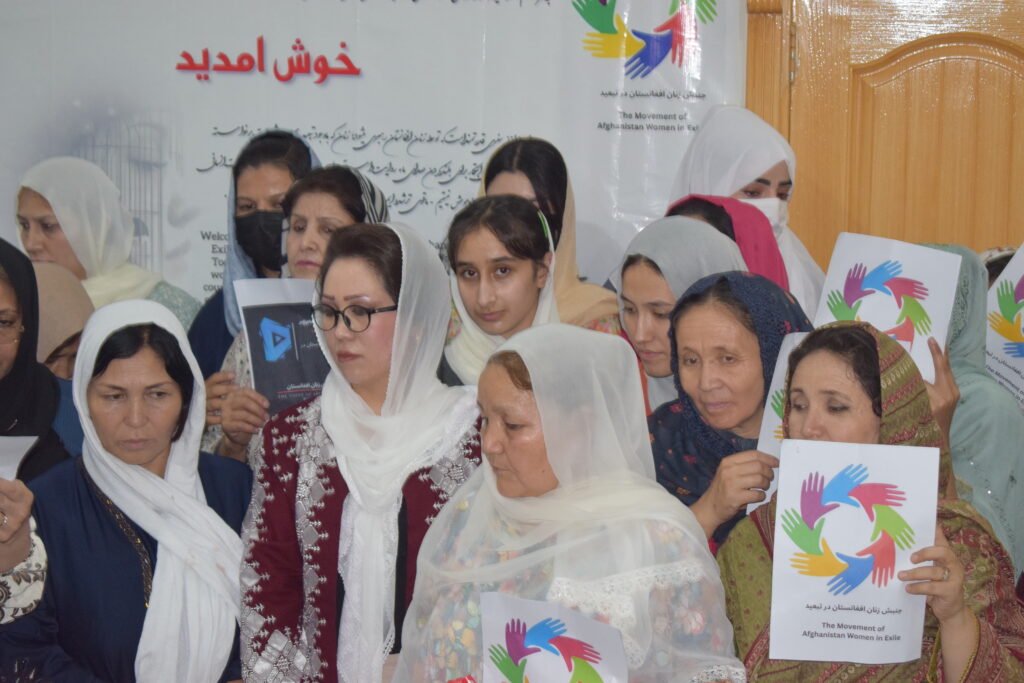
A newly established initiative, the Afghan Women’s Movement in Exile, has formally commenced its activities in Islamabad, Pakistan, under the leadership of Ms. Farzana Rezaei. The movement brings together a group of committed Afghan women who are active in advocacy, social justice, and the promotion of women’s rights.
Coinciding with the launch of the movement, an independent online media platform, titled “Afghan Women’s Media in Exile,” has also been inaugurated. The platform is dedicated to amplifying the voices of Afghan women living in exile and aims to provide a space for dialogue, awareness, and advocacy.
According to its founders, the creation of this movement is a response to the ongoing suppression of women’s rights in Afghanistan under the current regime, as well as the limited engagement by international institutions with the challenges faced by Afghan women in exile.
The movement’s primary objectives include:
Advocacy for the rights of Afghan women
Documentation and preservation of women’s experiences in exile
Building solidarity networks among displaced women
Providing access to educational and empowerment opportunities
Addressing negative stereotypes in media and host communities
In her remarks at the launch ceremony, Ms. Farzana Rezai stated:
“Exile does not equate to silence. The voices of Afghan women, even in displacement, can carry the message of freedom, resistance, and meaningful change.”
The Afghan Women’s Movement in Exile is committed to utilizing its independent media outlet to amplify the perspectives of Afghan women at regional and international levels, and to engage with global partners and institutions in support of their rights and aspirations.